

Café · the Bronx · ⭐ 9.9/10 · 3012 reviews · updated: 2026-08-10 16:27:52
Address: 2430 3rd Ave, Bronx, NY 10451, United States
In a borough where Puerto Rican identity is not a decorative theme but the background hum of daily life, a coffee shop that pours beans from an actual Puerto Rican mountainside is doing something more pointed than branding. 787 Coffee takes its name from the island’s telephone area code, and the coffee in the grinder here was planted, picked, washed, dried and roasted by the same company that hands you the cup. In Mott Haven that closes a loop most cafés never even open.
Highlights
- A café that owns its farm. Hacienda Iluminada, high in the mountains of Maricao in western Puerto Rico, is company land — planting, harvest, milling and roasting all handled by the same team that runs the counter.
- Single origin in the most literal sense. Not a rotating list of lots bought from brokers, but one estate, arriving in the shops fresh rather than sitting in a warehouse.
- The island menu is structural, not seasoning. Coquito in the winter, horchata and dulce de leche in the milk drinks, quesitos on the counter — these are the flavors the founders grew up with, not novelty syrups bolted onto an Italian template.
- Built to be worked in. Fast Wi-Fi, real table space and a room designed as somewhere to sit rather than a takeout hatch — a genuinely short list in this stretch of the South Bronx.
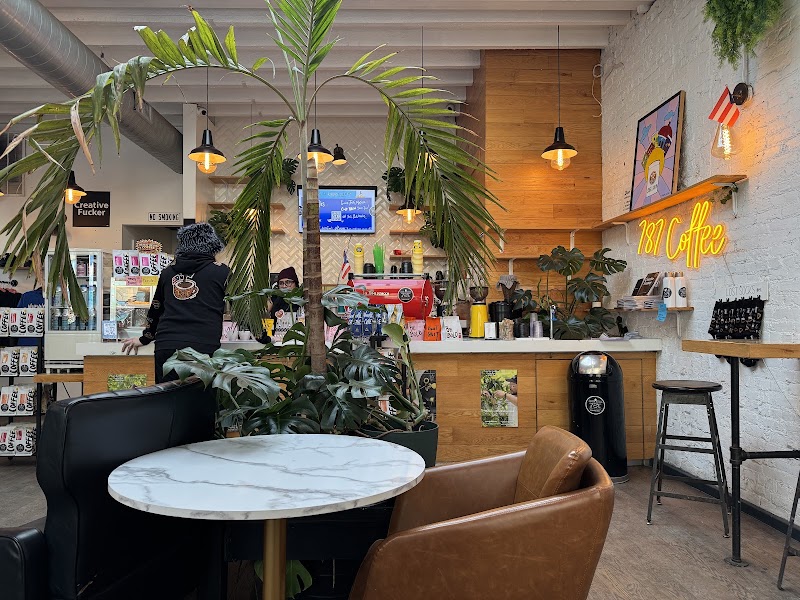
- Art on the walls and plants everywhere. The room leans tropical and bright, with rotating work by local artists rather than the stripped-concrete austerity that specialty coffee usually defaults to.
- Part of a growing group, but not a faceless one. Dozens of shops now run across New York, Puerto Rico, Texas, New Jersey and Mexico City, all pouring from the same hillside.
What’s in the cup
787 is a chain, and the honest way to write about a chain is through consistency rather than terroir poetry. This one is an unusual case, though, because the consistency has a single address. Virtually everything in the hopper was grown on the company’s own land, which inverts the normal specialty model. Most roasters buy lots from many farms and rotate them every few weeks, so the flavor is a moving target by design. Here the flavor is the flavor of one estate, and the effort goes into making that single voice reliable rather than into assembling a gallery of origins.
The farm sits high, under shade trees, on the volcanic soil of the island’s western range, where cloud cover and spring runoff do most of the watering. Coffee is grown in polyculture rather than by clearing the slope for one crop, picking is by hand because the terrain allows nothing else, and the roast that results is Caribbean rather than Nordic: sweet, rounded, weighted toward chocolate and nut instead of the sharp citric acidity that a light-roast filter bar chases. That is the right call for this room, because the overwhelming majority of what leaves this counter has milk in it. The coffee is built to survive a latte without disappearing.
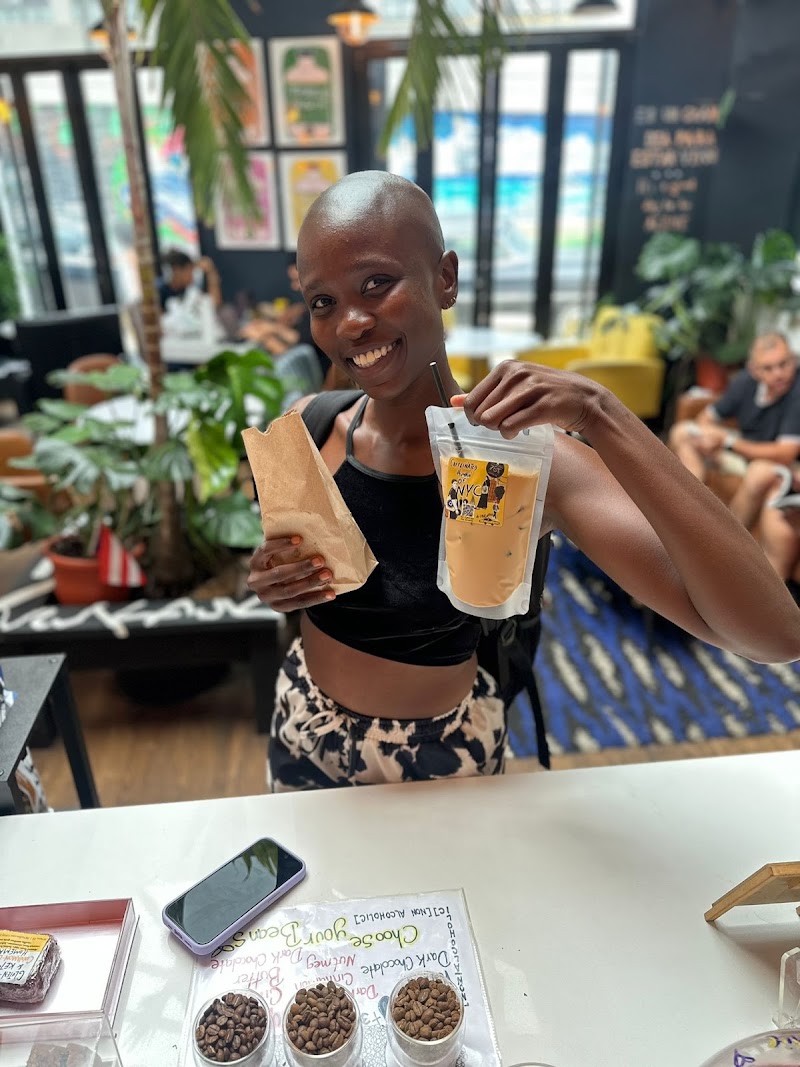
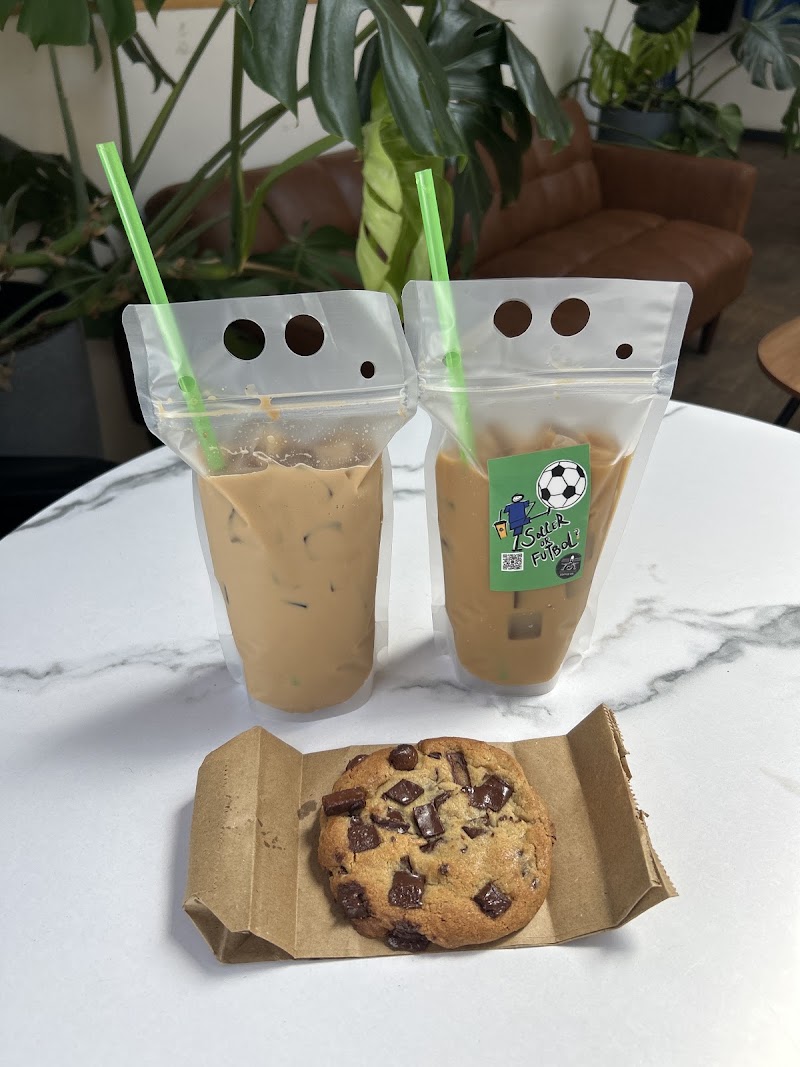
The house drinks follow directly from the origin story. The coquito latte is the one people come back for — the flavor of the island’s Christmas in a cup, and a small annual event in the neighborhood when it returns. Horchata and dulce de leche sit alongside it as year-round anchors. If your idea of a great coffee bar is a chalkboard listing four experimental lots from three continents, this is not that café and does not pretend to be. If you want to taste what one Puerto Rican mountain produces, poured a short walk from the largest Puerto Rican community in the city, there is no substitute for it anywhere in the borough.
Who’s behind it
The company was founded in 2014 by two Puerto Ricans, Brandon Peña and Sam Sepúlveda, and it began as a farm rather than a café — the first shop only followed once there was a harvest worth selling. Sepúlveda is an airline captain by trade who went on to qualify as a Q grader and Q processor, which is a strange and useful combination: someone who flies for a living thinks naturally about moving perishable cargo between an island and a mainland. They bought the Maricao property as an overgrown, half-abandoned farm, kept the old trees that were worth keeping and put tens of thousands of new ones into the ground.
Then, in 2017, Hurricane María took nearly all of it. The crop was destroyed, the shops shut, and the sensible business decision would have been to stop being a farm and start being a coffee brand like everyone else. They replanted instead. That decision is the company’s actual identity: the farm is not a marketing asset attached to a café group, it is the thing the cafés exist to sell. The Bronx shop is the point in that chain where the loop closes, because a large share of the people drinking here have family on the same island the coffee came from.
What it’s for
Of the coffee rooms in the southern Bronx, this is one of the small number genuinely designed around people who intend to stay. There is fast, reliable Wi-Fi, there are tables you can actually open a laptop on, and there is no unspoken pressure to finish and move along. Staff do not circle the room timing anyone. If you need a few uninterrupted hours to write, edit or take calls, this is a workable base — the practical limit is not policy but square footage, since the room is compact and every seat goes during the morning peak and on weekend afternoons.
For conversation it works better than the average specialty bar, precisely because nothing about the place is reverent. The register at the counter is warm and chatty, the staff will happily talk through the farm if you ask, and two people can sit for an hour without feeling like they are occupying someone’s revenue. It is a common meeting point for people working on neighborhood projects, and the room has the kind of ambient noise that makes a private conversation possible without leaning in.
A large share of the counter’s business is simply people passing through on the way to the train, and the queue is built to move at that speed. And for sitting alone it is comfortable in the way a bright, busy, unpretentious room usually is — you are neither on display nor invisible. The playlist is a real part of the experience here rather than background wallpaper, and it is chosen for this neighborhood specifically.
The space
A compact single room that reads cheerful rather than austere: pale walls, generous daylight from the front, tropical greenery worked through the seating and rotating artwork hung where a lot of cafés would put a menu board. The color in the branding carries into the room, so the impression is closer to an island living room than to the monastic gray that specialty coffee shops so often adopt. Seating is a real feature by the standards of the block, but the total count is modest, and at peak it fills and stays full.
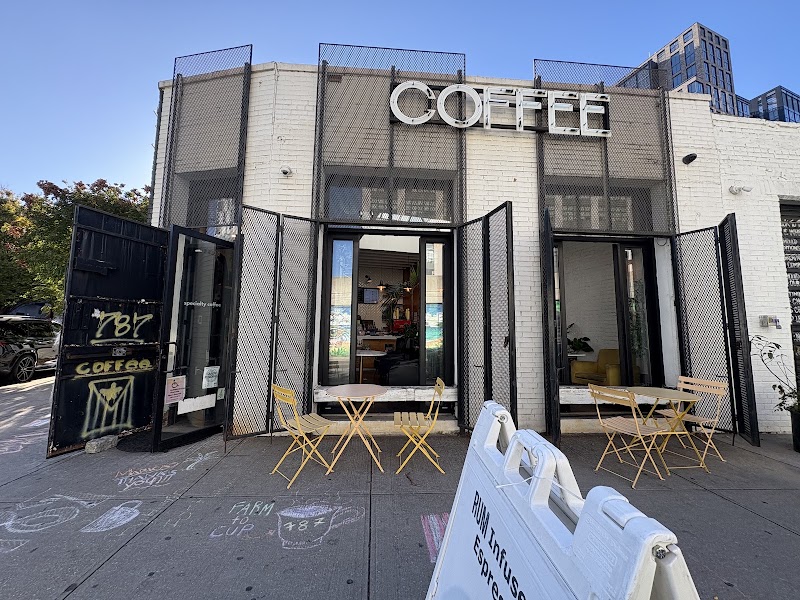
There is no garden or terrace to fall back on, which means fine weather is less of an advantage here than at places with outdoor space. The flip side is that the room works identically in February and July, which in this city is worth more than it sounds. Noise sits in the middle range — sociable rather than hushed, quiet enough for a call if the room is not at its fullest.
Beyond coffee
Food is a supporting act, and it is Puerto Rican rather than generic. The counter’s signature is the quesito, the flaky pastry rolled around sweetened cream cheese that an islander reaches for with a morning coffee, alongside the usual run of sweet baked things. There is no full kitchen and no cooked brunch service; nobody is making eggs to order. This is a coffee shop that sells something to eat with the coffee, not a café that serves coffee alongside a menu, and the distinction matters if you were planning a meal rather than a stop.
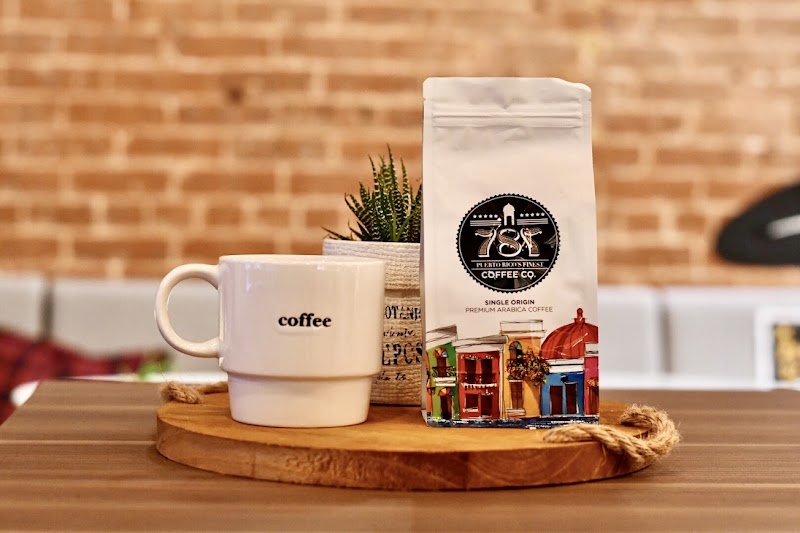
Whole bean and ground coffee from the farm is sold at the counter, along with brewing gear and merchandise, which is the practical way to keep drinking this particular hillside after you leave the borough. For anyone who takes the origin story seriously, the company also runs visits to the farm itself in Puerto Rico — an unusual thing for a café chain to be able to offer at all.
When to come
The doors open well before the working day starts, and the first stretch of the morning belongs to the commuter run: fast, busy and mostly takeaway. The calmest and most pleasant window is the middle of a weekday afternoon, when the room empties and the good seats free up — that is the slot to aim for if the plan involves a laptop and a few hours. Weekend late mornings and early afternoons are the busiest part of the week. The shop closes in the early evening rather than running late, so treat it as a daytime café: a morning stop, a working afternoon, an end-of-day coffee, but not an evening destination.
Getting there
The shop sits in Mott Haven, in the dense commercial stretch that runs north toward the Hub, the old retail heart of the South Bronx. The closest approach is the 6 train, which stops a very short walk away at the Third Avenue–138th Street station; the 4 and 5 at 138th Street–Grand Concourse are a slightly longer but entirely flat walk from the west. Coming from Manhattan the 6 is the obvious choice, and the trip from the top of the East Side is short enough that a lot of people make it purely for the coffee. Several bus routes converge on this corridor as well, and the Bronx Documentary Center and the historic blocks of old Mott Haven are within an easy stroll if you want to build an afternoon around the stop.
Good to know
Two honest caveats. First, the room is small, and the seating that makes it attractive disappears completely at peak. If the plan is a long sit, timing matters more here than at a larger café. Second, single-estate coffee means a single flavor family: anyone whose ideal coffee bar is a rotating list of experimental lots will find the bean selection narrow on purpose. What you get in exchange is traceability almost nobody can match, because the answer to “where is this from” is one farm with a name rather than a supply chain with a spreadsheet.
The sweet side of the drinks list is genuinely sweet — coquito, horchata and dulce de leche are not subtle, and they are the reason many people are here. If you drink coffee black, say so and ask what the current roast is doing; the staff are used to the question and generally know the answer. And be aware that this is a shop with a much larger family: what you drink here you can drink in Manhattan, Texas or San Juan, which is either reassuring or beside the point depending on what you came for.
Questions and answers
Does 787 Coffee really grow its own coffee?
Yes. The company owns Hacienda Iluminada, a farm in the mountains of Maricao in western Puerto Rico, and grows, processes and roasts what it sells. Very few café groups anywhere in the world can say that, and it is the entire point of this business rather than a line in the marketing.
Is this a good place to work on a laptop?
Yes, with a caveat about timing. The Wi-Fi is fast, the tables are usable and nobody moves you along. But the room is compact and completely full at the weekday morning peak and on weekend afternoons, so aim for a weekday mid-afternoon if you need a guaranteed seat and a few hours of quiet.
What should I order the first time?
The island drinks are the reason to come: coquito when it is in season, horchata or dulce de leche the rest of the year. If you drink coffee black, ask what the current roast from the farm is and take it as espresso or filter — that is the most direct way to taste what the estate actually produces.
What does the number in the name mean?
787 is Puerto Rico’s telephone area code. The whole brand is a statement about where the coffee comes from, which lands differently in the Bronx than it would anywhere else in the city.
Is there proper food?
Pastries rather than meals. The signature is the quesito, a Puerto Rican cream-cheese pastry. There is no kitchen and no cooked brunch, so plan to eat elsewhere and drink here.
Is it a chain?
Yes, and a sizable one. But unlike almost every other chain, every shop pours coffee from the company’s own single farm, so growth here means more mouths for one harvest rather than a blend assembled from anonymous lots.
Can I buy beans to take home?
Yes, whole bean and ground, along with brewing equipment. It is the standard souvenir from this counter and the reason a lot of people walk out carrying a bag.
Is it open in the evening?
No. This is a daytime café that shuts in the early evening. Use it for mornings and afternoons, and look elsewhere in the neighborhood for a late sit-down.
Opening hours
| Day | Hours |
|---|---|
| Monday | 07:00–17:00 |
| Tuesday | 07:00–17:00 |
| Wednesday | 07:00–17:00 |
| Thursday | 07:00–17:00 |
| Friday | 07:00–17:00 |
| Saturday | 07:00–17:00 |
| Sunday | 07:00–17:00 |
Photos
Visitor reviews
Reviews last updated: 2026-08-10 16:27:52
Data is refreshed monthly. Sources: bronxanka.com and editorial picks based on reviews.
Я чудово провела час у кав'ярні «787 Coffee»! Кава була смачною, атмосфера теплою та гостинною, а обслуговування клієнтів винятковим. Окрема подяка Єскарлін, яка була неймовірно приємною — доброзичливою, обізнаною та з п…
Кав'ярня "787" у Бронксі – це чудова кав'ярня зі спокійною та гостинною атмосферою. Зручне та просторе розташування, є місця як у приміщенні, так і на вулиці. Персонал надзвичайно доброзичливий та забезпечує відмінне обс…
Випадкового дощового четверга я зайшов до цієї місцевої кав'ярні, що належить Пуерто-Рико, і одразу закохався в неї. Від натуральних рослин до лате з кокіто та кавових зерен – все в цьому місці кричить «Пуерто-Рико!». Я…
This place is great!!! The atmosphere is calming but welcoming and the food is pretty good! I wish they had more PuertoRican desserts tho. They are also very kind when it comes to pets plus they provide little pup cups!…
Якщо ви раптом опинилися у цій єрії, обов'язково завітайте до цього затишного кафе з неймовірними смаками кави. Ціна за каву не дешева але вона того варта!.
Дякуємо хлопцям Miguel та Rigo за професійну роботу. Реально ду…