

Café · the Bronx · ⭐ 9.7/10 · 454 reviews · updated: 2026-08-10 16:27:54
Address: 1015 Castle Hill Ave, Bronx, NY 10472, United States
Most cafés open because someone wanted to run a café. The Way Cafe opened because a family moved to the eastern Bronx and decided the most useful thing they could build here was a room where the neighborhood could sit down. It is a Mennonite-founded, faith-based business in a corner of the borough that tourists never reach, it opened in the worst month anyone could have chosen, and it has since become one of the few genuinely calm counters in Castle Hill.
Highlights
- Opened in June 2020 — that is, straight into the pandemic, which was nobody’s plan. It was the owners’ first business of any kind, and it survived the opening year that closed far better-capitalized places.
- A Mennonite family behind the counter — the founder is Andy Weaver, who came from Lebanon, Pennsylvania, moved his family to the Bronx in 2017 and opened the café exactly three years later.
- The name is a statement of intent — it comes from the verse “I am the Way, the Truth, and the Life,” and the café says openly that a peaceful room and a message of hope are part of why it exists.
- Kitchen work is real — paninis and sandwiches are built to order, breakfast is cooked rather than reheated, and the sweet things are made in house rather than bought in by the tray.
- Deliberately calm — “a peaceful environment” is the stated goal rather than a listings-site compliment, and the room is run that way: no bar, no late night, no stage.
- Not a Pennsylvania Dutch theme restaurant — the owner has said plainly that his background does not drive the menu. The food is ordinary New York café food done carefully.
What’s in the cup
Here is the honest part first: The Way Cafe does not publicize who roasts its beans, and it does not present itself as a roastery or a single-origin bar. There is no public sourcing story to repeat, and inventing one would be worse than admitting the gap. What is documented is the approach — the owner is described by people who go there regularly as personally invested in the coffee side, and drinks are made to order rather than pulled from a warmer, which is not a given in this part of the borough.
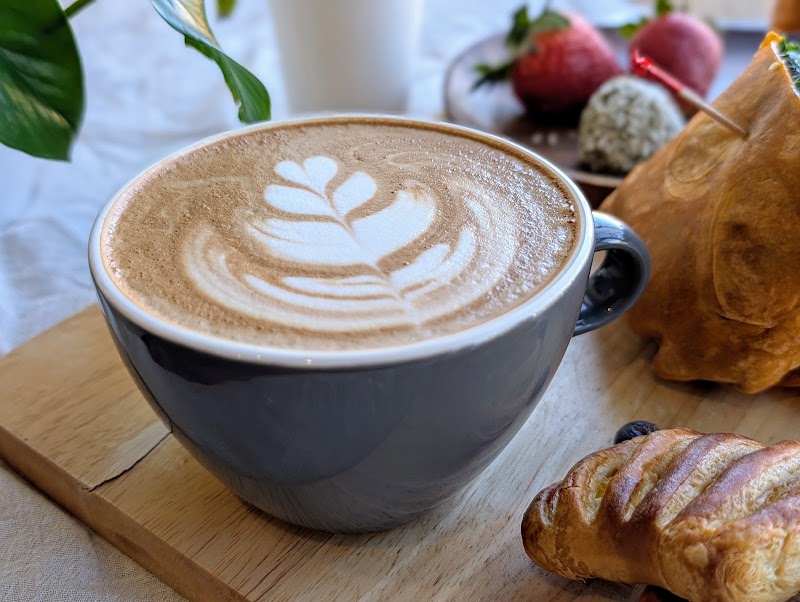
In practice the cup here belongs to the mainstream American café school rather than the competition-filter school. Espresso built to carry milk is the backbone, because that is what a neighborhood of commuters, parents and hospital and school staff actually orders. Alongside it sits the flavored-latte tradition that Bronx cafés do well and specialty purists sniff at — the house has a reputation for treating those drinks as something to get right rather than something to tolerate. Tea is a real order, and there is a cold, blended and juice side of the list for the long stretch of the year when the eastern Bronx is hot.
Set your expectations accordingly. If you want a rotating filter menu and a conversation about processing methods, this is not that café and has never claimed to be. If you want a well-made milk drink in a quiet room, made by someone who cares whether it is good, it delivers exactly that — and in Castle Hill, where the alternative is usually a deli urn or a drive-through window, that difference is the whole reason the place has a following.
Who’s behind it
The café was founded by Andy Weaver, a Mennonite originally from Lebanon, Pennsylvania. He has described his community as close to the Amish but with a far friendlier relationship to technology and a stronger habit of engaging with the wider society — which is a useful key to the business, because there is nothing withdrawn about it. The family moved into the neighborhood in June 2017 and opened the café in June 2020, three years to the month, and it was the first café any of them had owned.
The café grew directly out of the founding of a Bronx Mennonite church, and it is best understood as the church’s front door onto the street rather than a side project. The stated purpose is threefold: to interact with the community, to create a peaceful environment, and to share a message of hope — with good food and a good product treated as the non-negotiable first condition rather than a decoration. The name follows the same logic. You do not have to share any of it to be a customer; that is not how the room is run. But it explains why the place feels different from a café built around a business plan, and it explains the days it chooses not to open.
Who the room suits
This is, above all, a place for a conversation that needs somewhere quiet to happen. A room whose declared aim is peacefulness is a rare asset in a dense residential neighborhood, and it is used accordingly: two people catching up, a parent with a child after school, someone meeting a neighbor who does not want to do it in a fast-food dining room. If your visit has a person in it, this is the strongest use of the place.
The second use is solo time — reading, a notebook, a slow breakfast alone. The café’s own framing invites lingering rather than turnover, and the atmosphere is closer to a village tearoom than to a downtown espresso bar. Laptop work fits this room in principle, but the café does not publish a policy about it and it is small, so common sense applies: ask about power at the counter, do not spread out across a table for four at the busiest stretch of the morning, and treat a modest room with the courtesy you would want from someone else.
The third use is the everyday one, and probably the most common: breakfast or a working lunch on a weekday, taken in or carried out. Because sandwiches are assembled to order, this is a proper lunch stop rather than a coffee stop with snacks attached, which is exactly what a residential district with few good options needs. What the café is not is an evening venue. There is no bar, nothing happens here at night, and the week has two days on which it does not open at all — plan around that rather than discovering it at the door.
The room
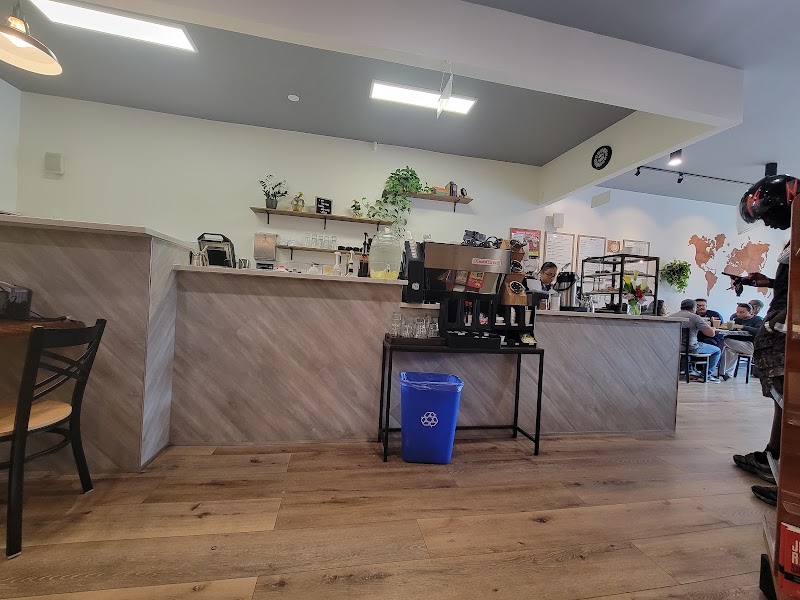
The format is what New York calls a boutique eatery: one modest room, table service in spirit if not always in practice, and a counter you can actually talk across. It is not a warehouse conversion, there is no mezzanine, and there is no second dining room to hide in — everything happens in one space, which is precisely why the noise level stays where the owners want it.
The atmosphere is the product. Cafés in busy residential corridors usually solve their economics with volume and hard surfaces; this one has gone the other way and made calm the selling point. That has a trade-off worth naming: at the peak of a weekday morning, a small room with a made-to-order kitchen moves at its own pace, and if you are in a hurry you will feel it. Come with ten spare minutes and it is a pleasure; come with three and you have picked the wrong door.
Beyond coffee
Food is not an afterthought here, which sets the café apart from most of the coffee-first places in the borough. There is a real breakfast offer, cooked rather than assembled from a warming tray. There are pressed and made-to-order sandwiches, salads, and blended and juice-based drinks for the summer. The sweet side is made in house rather than delivered in a box, which is the single most useful binary fact about any café’s counter display and the one most places quietly fail.
The other thing worth knowing is what the menu is not. Given a Pennsylvania Mennonite founder, visitors sometimes arrive expecting Pennsylvania Dutch cooking — shoofly pie, whoopie pies, that whole register. The owner has said directly that this is not what the café does. What you get is careful, contemporary New York café food, with the founder’s background visible in how the place is run rather than in what is on the plate.
When to come
This is a morning-and-midday café. It opens early enough to catch people before work, does its main business through breakfast and lunch, and closes in the afternoon rather than trying to be an evening room — there is nothing here after dark, by design. The rhythm suits a leisurely start to the day far better than a late one.
The week is short. The café does not run seven days: the beginning of the week and Sunday are closed, which is unusual enough in New York that it catches people out regularly, and the Sunday closure is consistent with the church roots of the business. Check the schedule on the card before you make the trip, especially if you are coming from outside the neighborhood. Weekday mid-mornings are the calmest window; the lunch stretch is the busiest, and in a small room with a made-to-order kitchen that is felt more sharply than it would be elsewhere.
Getting there
The café sits in the Castle Hill and Unionport area of the eastern Bronx — a dense, largely residential district of apartment blocks and family houses, a long way in feel from the parts of the borough visitors know. The 6 train’s Castle Hill stop is the nearest subway, and local buses run the length of the corridor, which is how most regulars arrive. Drivers have a considerably easier time here than in the south or west of the borough, and the expressway crossing the Bronx puts the place within reach of Queens and Westchester without much drama.
For anyone coming from Manhattan, be realistic about the ride: this is the far side of the Bronx, and the trip is longer than a hop to the South Bronx. The reward is a café that functions the way a neighborhood café should, on a stretch where that is genuinely scarce — but it is a destination for locals first and a detour for everyone else.
Good to know
Three things are worth knowing before you go. First, the faith behind the business is stated openly rather than hidden — it is in the name, in the founding story and in the days the café keeps closed. It is a fact about the place, not a demand made of customers, and people of every persuasion in the neighborhood use it as an ordinary café.
Second, the research trail on the coffee itself is thin. This is a small independent that has not published a sourcing story, so anyone telling you which roastery supplies it is guessing. What is verifiable is the family behind it, the year, the mission and the kitchen.
Third, plan around the short week and the small room. Two closed days, an afternoon finish, made-to-order food and one modest space are all facts that reward a little planning and punish none at all. Arrive unhurried and this is one of the most pleasant counters in the eastern Bronx.
Questions and answers
When did The Way Cafe open?
In June 2020, in the middle of the pandemic — which was not the plan. The owners had moved to the neighborhood exactly three years earlier, and it was the first café they had ever run.
Who owns it?
Andy Weaver, a Mennonite originally from Lebanon, Pennsylvania, who relocated with his family to the Bronx in 2017. The café grew out of the founding of a Bronx Mennonite church.
Is it a religious café? Will I be preached at?
It is a faith-based business and says so openly — the name comes from a Bible verse and sharing a message of hope is part of its stated purpose. It operates as a normal café serving the whole neighborhood, and the food and drink are the business.
Who roasts the coffee?
The café does not publish that information, and it does not present itself as a roastery. Anyone stating a roaster name for this address is guessing.
Is the food made on site?
Yes — sandwiches and paninis are built to order, breakfast is cooked, and the sweet items are made in house rather than bought in ready-made.
Is it Pennsylvania Dutch or Amish-style food?
No. The owner has said directly that his background does not drive the menu. It is contemporary New York café cooking.
Is it open every day?
No. It runs a short week, with the start of the week and Sunday closed, and it finishes in the afternoon rather than staying open in the evening. Check the schedule on the card before travelling.
Can I work here?
It is a quiet room and suits reading, writing and meetings, but it is small and has no published laptop policy. Ask about power at the counter and avoid the lunch rush if you need a table for a long stretch.
How do I get there?
The 6 train’s Castle Hill stop is the closest subway, with local buses covering the rest of the corridor. It is in the eastern Bronx, so allow more travel time from Manhattan than you would for the South Bronx.
Opening hours
| Day | Hours |
|---|---|
| Monday | Closed |
| Tuesday | 07:00–16:00 |
| Wednesday | 07:00–16:00 |
| Thursday | 07:00–16:00 |
| Friday | 07:00–16:00 |
| Saturday | 08:00–15:00 |
| Sunday | Closed |
Photos



Visitor reviews
Reviews last updated: 2026-08-10 16:27:54
Data is refreshed monthly. Sources: bronxanka.com and editorial picks based on reviews.
Це чудове маленьке кафе, куди можна заскочити, щоб насолодитися дружнім спілкуванням, смачною їжею та кавою, втекши від міського шуму та метушні.
Дорінда та Лус приготували мені дуже смачний паніні з куркою чіпотле та ні…
Кафе «The Way Cafe» стало однією з перлин громади. Це моє улюблене місце, незалежно від того, чи замовляю я страви в закладі, чи на винос. Атмосфера – це найпривабливіша риса, разом із сезонним вибором страв у меню.
Про…
Кав'ярня "The Way" – це справжня перлина! Їжа та напої неймовірні! Все готується свіжим та на замовлення. Випічка просто неймовірна, її готують на місці. Персонал дуже привітний, а обслуговування клієнтів фантастичне! Ду…
Я випадково зазирнув по дорозі додому, це кафе справді миле. Тобі безкоштовну випічку, якщо ти тут вперше. Я замовив протеїнову асаї та чай. Було справді смачно. Персонал такий привітний. А ще вони продають книги та журн…
Неймовірний досвід у The Way Café
Я багато разів проходив повз The Way Café і нарешті вирішив завітати — і я дуже радий, що зробив це. Атмосфера була неймовірно заспокійливою та мирною з того моменту, як ми зайшли. Я бу…