

Tattoos have recently become very popular. People usually take this form of self-expression seriously, since unlike with piercings or bold hairstyles, it’s a far more permanent decision. But there are times when you need to change your mind. The choice to remove a tattoo isn’t always about regretting a mistake or an impulsive decision. A person’s life circumstances can change—they might switch jobs, change their beliefs, or alter their lifestyle. For instance, a job posting for a certain position might list “no visible tattoos” as a requirement. Often, people with tattoos want a touch-up or want to add to their design, which sometimes requires partial removal of certain elements. It’s also not uncommon for people to seek removal for a tattoo done by an unqualified artist. So today, we’re sharing recommendations from Bronx experts on the process of laser tattoo removal. You can learn more on bronxanka.com.
Modern Tattoo Removal Methods
Specialists at Medical Cosmetic and Surgical Dermatology in the Bronx note that there are three main methods for getting rid of a tattoo:
- Remover.
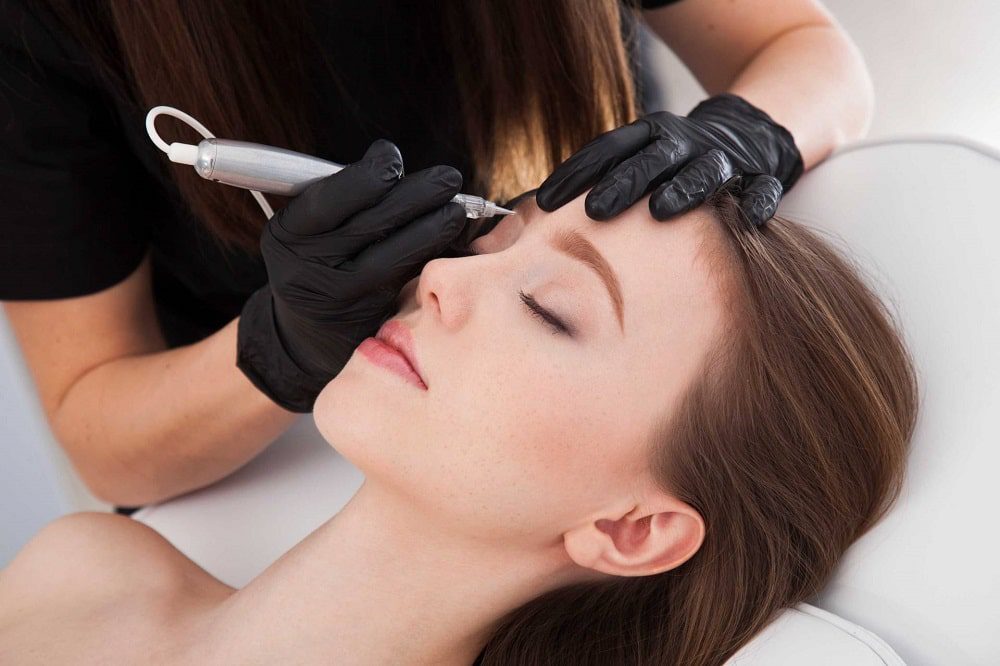
This procedure involves injecting a special chemical solution under the skin. The active (usually alkaline) ingredients react with the pigment to form an emulsion, which is then forced to the surface through the skin’s pores. This service is typically performed by permanent makeup artists. The method is effective but has several drawbacks. First, the skin is damaged, so there’s a risk of scars and raised keloids. Second, the removers contain quite harsh chemicals, so there’s a high risk of an allergic reaction. And third, the procedure can be quite painful because it’s done using a tattoo gun.
- Surgical Excision.
This is the most radical method; it even sounds horrific. A doctor literally cuts away the tattooed skin with a scalpel, removing the layers of the epidermis and dermis where the pigment resides. Sometimes, cosmetic sutures are needed. Scarring is unavoidable with this method. Therefore, it’s not recommended to use this technique on overly exposed areas, especially on the face.
- Laser Removal.
This is the least invasive method. It doesn’t break the skin and doesn’t introduce harsh chemicals into the body.
Of these three methods, the last is the one most often used by specialists in the Bronx for a more gentle and safe way to remove tattoos.
How Laser Tattoo Removal Works
Before any tattoo removal, you must consult a doctor and make sure you have no contraindications.
Remember that you should not get laser treatment on tanned skin. Start using sunscreen (at least SPF 35) a few weeks before your session.
It’s also a good idea to remove hair from the treatment area and avoid alcohol and antibiotics the day before your laser tattoo removal appointment.
Specialists from the “Esthetique” studio in the Bronx explain how a laser works. Under the action of high-pulse waves, the pigments heat up intensely, causing them to break down into many tiny particles. The destroyed cells remain under the skin and are then gradually cleared naturally from the body, as they are absorbed by the immune system’s macrophages and exit via the lymph system. In some cases, a local anesthetic is applied.
There are many types of lasers (picosecond, alexandrite). The Nd:YAG laser is the one most often used by specialists because it has a strong reputation for its high effectiveness.
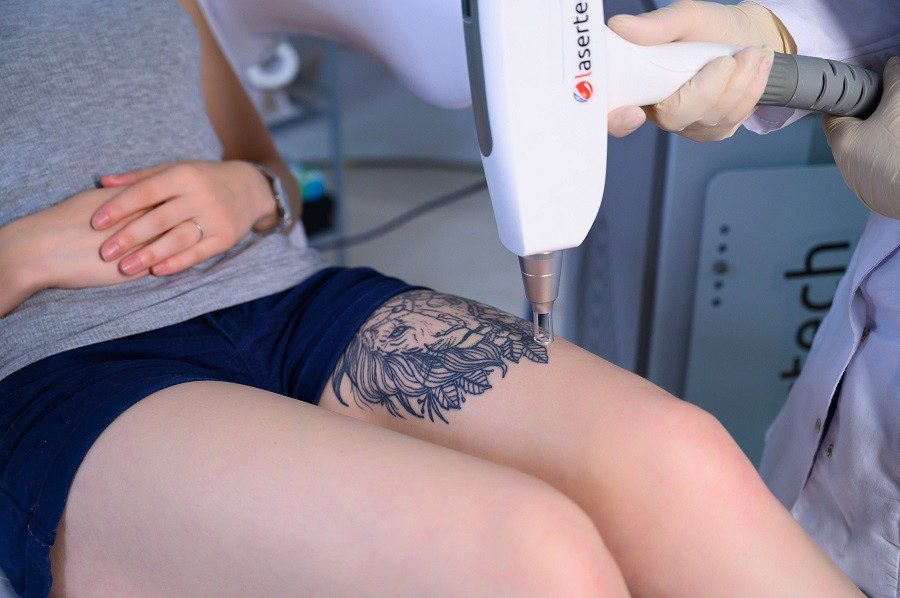
Before the session begins, the specialist adjusts the device based on the depth of the pigments and the color palette of the design.
Who Should Not Get Laser Tattoo Removal
Even though this procedure doesn’t require anesthesia or any invasive intervention, there is still a list of contraindications. These include:
- Skin damage in the treatment area (cuts, inflammation, severe bruises, burns).
- A tattoo that was done less than 2 months ago.
- Blood clotting disorders.
- Autoimmune diseases.
- Acute infections.
- Cardiovascular diseases.
- Elevated body temperature.
- Dermatological conditions.
- Decompensated diabetes mellitus.
- Epilepsy.
- Cancer.
- A tendency to form keloid scars.
- Photosensitivity (increased sensitivity to UV light).
- Pregnancy and breastfeeding.
You must also inform your doctor if you are taking any medications. And be cautious when choosing a specialist for this procedure. If the artist is not qualified, the best-case scenario is an unsatisfactory result with incomplete pigment removal; the worst-case scenario is burns, contracting an infection, or permanent scars.
Read the article, “Top 20 Practices for Stress Relief in the Bronx” by following the link.
What Affects the Results
Each tattoo removal case has its own unique characteristics. Many factors influence the number of sessions and the final result. The most important ones are:
- Pigment Color.
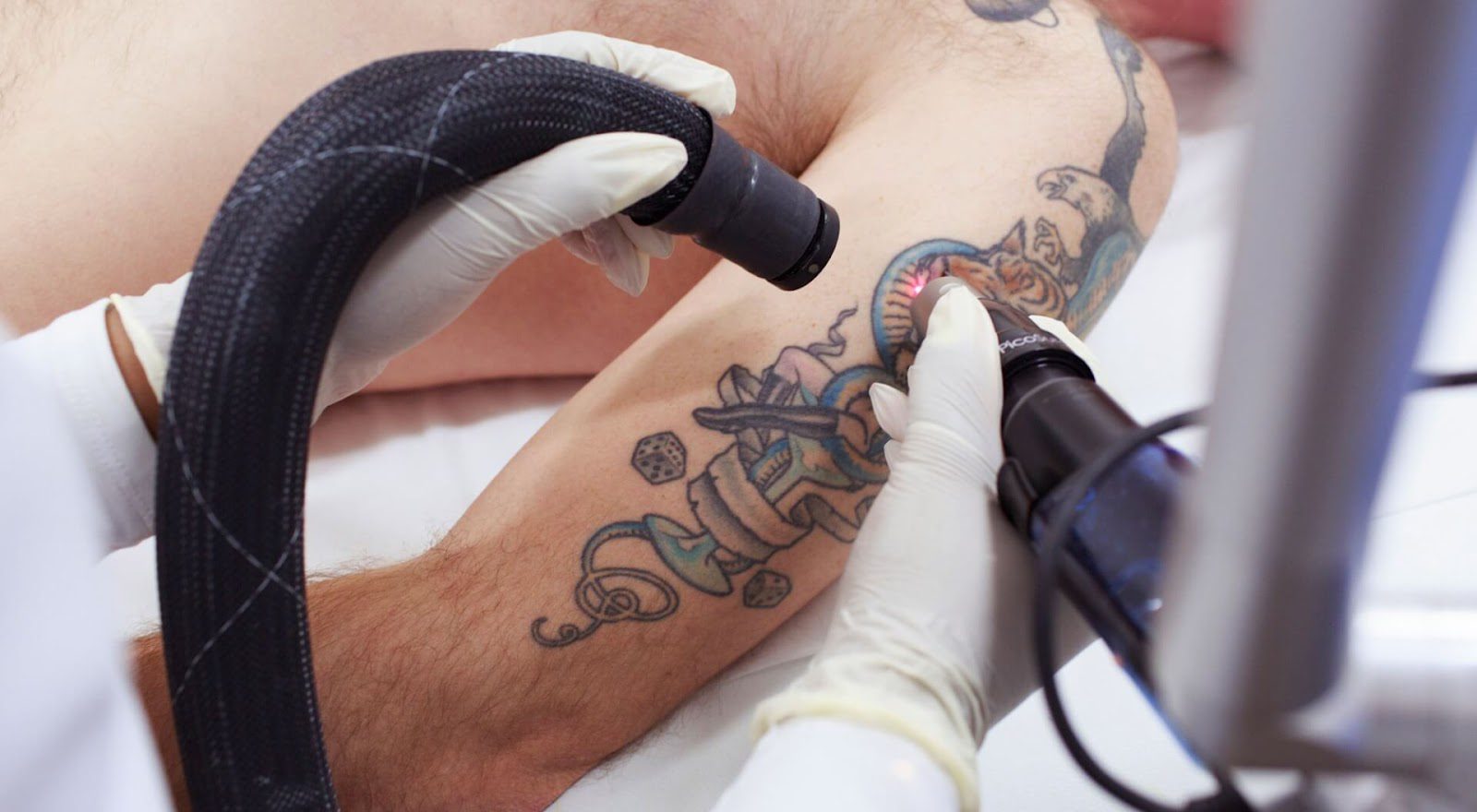
Blue and black tattoos are the fastest to remove, while colored ones take more time. Light pink, yellow, and light blue tones are the most difficult to erase.
- Depth of the Ink.
The laser breaks down all layers of the design gradually. Accordingly, the deeper the tattoo, the more sessions will be needed.
- Quality of the Dyes.
Modern inks and dyes can be removed relatively quickly. However, a tattoo done with homemade ink (often a mix of soot and alcohol) will be much more difficult to remove.
- Skin Tone.
Removal is more effective on light skin. Those with tanned or dark skin have a harder time. Their dark pigments partially absorb the laser’s energy, making it more difficult to erase the tattoo. High levels of melanin create certain obstacles for removal, but qualified professionals can solve this problem.
After the procedure, the treated area may show slight swelling and redness. This is normal. Be prepared for the tattoo to temporarily darken and become clearer over time. This is how it should be, so there’s no need to worry. The final effect can be assessed in 3-4 weeks.
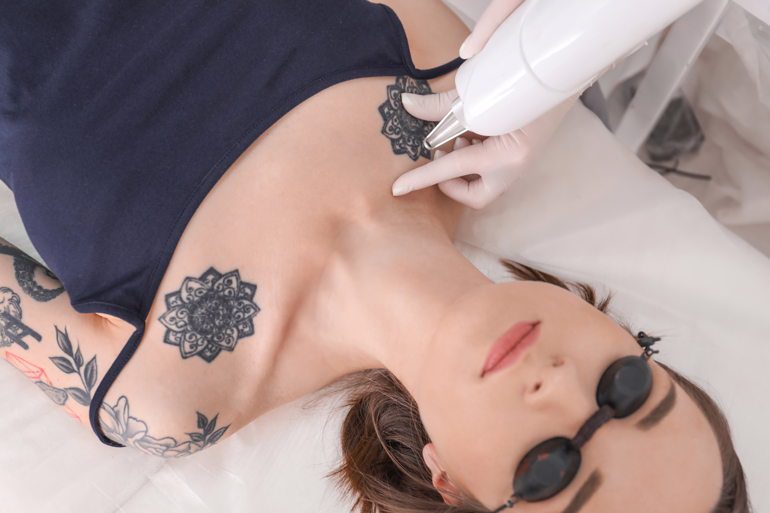
You won’t be able to completely get rid of a tattoo in a single session, even if it’s small and not very vibrant. On average, removing one tattoo requires 5-10 sessions with an interval of 4-8 weeks. A specialist can estimate the number of sessions needed during the initial consultation. However, this is an approximate guess; a more accurate projection can be given once the work has begun.
What to Avoid After the Procedure
Specialists at the large clinic network West Derm Center, which has several branches in New York and one center in the Bronx, advise taking the post-session recovery seriously. At first glance, it might seem that no restrictions are necessary, since the procedure doesn’t even break the skin. But to avoid a negative reaction, you should follow these rules:
- Avoid contact with water for 24 hours.
- For two weeks, avoid places like saunas, steam rooms, and pools. You should not steam the treated skin.
- Avoid direct sunlight on the treated area and use sunscreen.
- Protect the treated skin from mechanical damage: don’t scratch, pick, rub, or shave it.
- Drink plenty of water to stimulate the lymph drainage process.
- Avoid alcohol-based products.
- Limit alcohol and spicy foods, as they negatively affect liver function (this organ plays a key role in the process of clearing pigments from the body).
Healing time depends on the size of the tattoo and the laser’s power. To speed up healing, you can apply chlorhexidine or a regenerating cream containing panthenol (after consulting with your doctor).
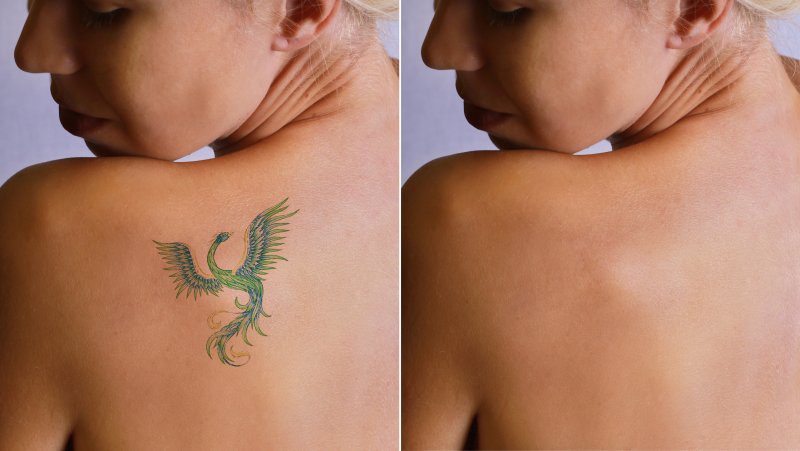
The price of laser tattoo removal depends on the size of the design and the color spectrum (monochrome tattoos are cheaper, while colored ones are more expensive).
Read the interesting article, “20 Rules of a Happy Woman in the Bronx” by following the link.