

Women from the Bronx are known for their courage, always ready to stand up for their values. They understand the importance of supporting those in difficult situations and do so openly, bravely, and effectively.
One of these remarkable New Yorkers is Tarana Burke, whose story we share on bronxanka.com.
Childhood and Early Life
Tarana Burke was born on September 12, 1973, in the Bronx. Her early years were filled with hardships and challenges. She faced physical and emotional abuse and experienced the pain of bullying. These experiences became a driving force for Tarana, who found within herself the strength to fight and become a guide for others who had been oppressed or hurt.
Tarana attended Alabama State University, later graduating from Auburn University. During her college years, she was already involved in meaningful social projects, organizing peaceful protests against gender and racial inequality and providing help to young women marginalized by society.
Through her experiences, Tarana understood she wanted to “fight against injustice,” and she actively pursued this noble mission. The young girl who endured difficult events grew into a strong and courageous woman—a savior for many.
Activist from the Bronx
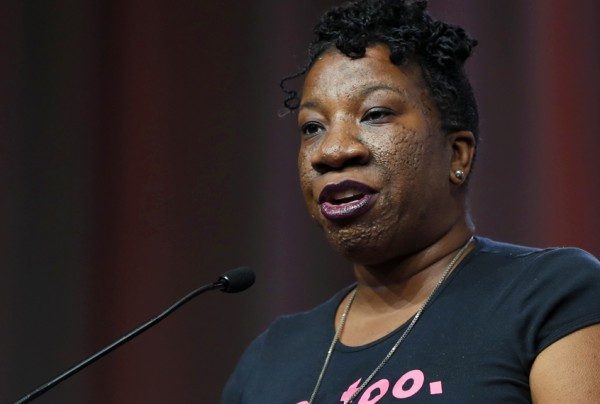
In 1996, Burke worked as a teacher. One day, a young student confided in her about experiencing abuse. For Tarana, who had endured similar experiences, this felt like a “personal tragedy.” She later regretted that, at the time, all she could find the strength to say to the girl was, “Me too.” Burke resolved that she would no longer be silent.
In 2003, Tarana founded the organization “Just Be,” which focused on helping and supporting young women. Her work emphasized instilling a sense of well-being and healthy living among these women.
By 2007, the “Me Too” movement had emerged. Burke described “Me Too” as a “chain of solidarity” for survivors of sexual abuse. That same year, she publicly shared her own painful experiences, hoping to show others they should not fear speaking out. Her transparency brought her widespread recognition and elevated her voice within society.
In 2017, Burke was named one of the most influential people by Time magazine. She had the honor of leading the New Year’s countdown in Times Square, surrounded by a massive crowd.
In 2018, the celebrated activist was invited to appear on The Daily Show, where she discussed the importance of fighting violence and supporting survivors.
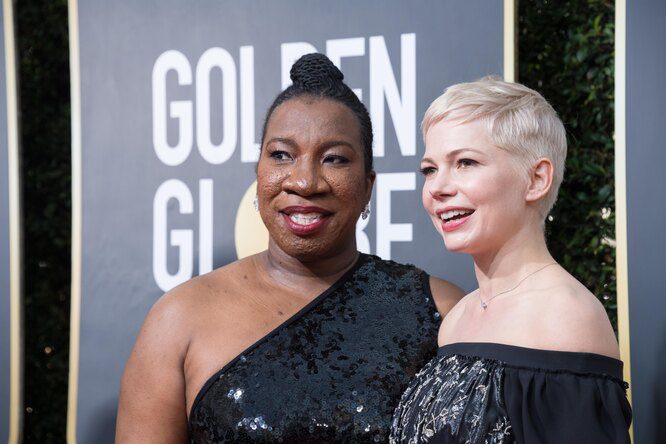
Many prominent figures openly supported the movement and its founder. Actress Michelle Williams, for example, invited Tarana to accompany her at the Golden Globe Awards.
Tarana Burke has been recognized with numerous awards for her achievements. She received the Women Making History award from the National Women’s History Museum, the Courage Award from The Ridenhour Prizes, an Honorary Pioneer title from VH1, and the Disobedience Award from MIT Media Lab, among others.
The “Me Too” Movement
Let’s delve deeper into the phenomenon of the “Me Too” movement. Most people have likely heard of it or seen the hashtag trending on social media. The movement has garnered massive attention worldwide.
The movement gained traction after a scandal involving Hollywood producer Harvey Weinstein, who faced numerous accusations of harassment and abuse of power. Actress Alyssa Milano called on her colleagues to publicize this issue and share their own painful experiences. The internet was soon flooded with stories from people who had endured similar experiences, all accompanied by the hashtag “Me Too.” This wave of disclosures occurred in 2017.
However, back in 2006 and 2007, Tarana Burke had already used the phrase “Me Too” on MySpace and started the movement to support survivors of abuse.
These two events combined into one global social campaign, “Me Too.” Every survivor of violence now realized they were not alone.
Tarana Burke has since emphasized that this campaign should evolve into a lasting movement, not just a moment. Sexual violence cannot be ignored or forgiven.
Finding the courage to speak publicly about such events is a significant step in the fight against injustice.