

This relatively new psychotherapeutic approach is primarily used to treat post-traumatic stress disorder (PTSD), as well as anxiety, depression, phobias, and even chronic pain. Read on bronxanka.com to learn more about its mechanism, features, indications, contraindications, and how to find EMDR therapy in the Bronx.
What Is EMDR Psychotherapy
Imagine a therapy method where you don’t have to “dissect” painful memories for hours. Instead, under the guidance of a specialist, you gently revisit traumatic events while following a series of rhythmic eye movements or listening to alternating sounds. This is EMDR (Eye Movement Desensitization and Reprocessing).
The method was founded by psychologist Francine Shapiro in 1987. Legend has it that one day she left a cancer hospital feeling depressed and went to a park. As she watched birds land on and take off from a lake, she felt an unexpected sense of relief. It was then that the idea was born to research how eye movements could affect the psyche.

The essence of EMDR is that during special exercises, the brain gains access to memories that were previously “stuck.” Unprocessed traumatic information can manifest as nightmares, flashbacks, or panic reactions. EMDR helps to “unblock” this process; the traumatic experience gets integrated into memory but stops causing emotional distress.
The human psyche has a natural information-processing mechanism. But sometimes, traumatic events get stuck in memory, and that’s when help is needed. EMDR activates this mechanism.
The key element is bilateral stimulation: eye movements from left to right, rhythmic tapping, or alternating sounds that activate the right and left hemispheres of the brain. This creates an effect similar to what happens during natural sleep, when the psyche processes daily experiences.
The method works for major traumas—like war, violence, car accidents, or natural disasters—as well as less obvious ones, such as childhood emotional wounds, difficult relationships, or chronic stress. In all cases, the principle is the same: to help the brain complete the unfinished process of memory reprocessing.
EMDR’s effectiveness is scientifically proven and recognized by the WHO as a method for treating PTSD. In over 30 years, it has helped millions of people find freedom from the burden of their past.
What an EMDR Session Is Like
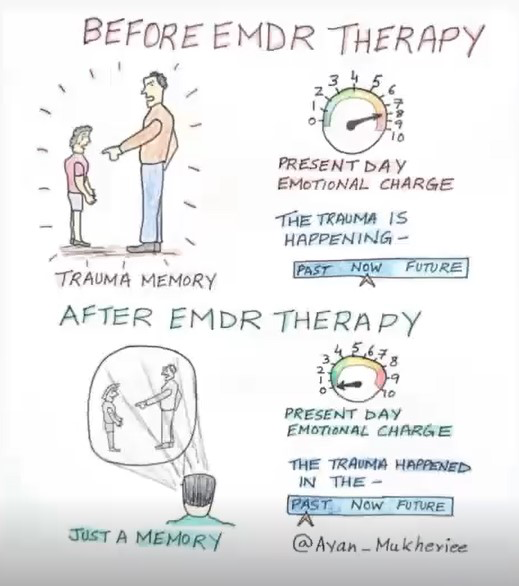
Let’s use the example of an adult who occasionally remembers being yelled at by their father as a child. This memory still evokes strong emotions.

“Even if you don’t consciously think about this event every day, a part of your energy is still being used to keep it at bay. And any trigger—for example, a person who reminds you of your father—can instantly bring back those unpleasant feelings,” explain psychologists at Luminous Mental Health Counseling in the Bronx.
EMDR therapy helps you look at traumatic events from a safe distance. The memory becomes just a memory: the mental image fades, and the stress level drops to almost zero. You no longer expend energy and resources on it.
The therapy consists of eight phases, during which attention is paid not only to the memory but also to beliefs and physical sensations in the body. At the end, a positive perception of the situation is formed:
- History and Treatment Planning. The therapist identifies symptoms, gathers a history of traumas, and maps out the memories.
- Preparation. The client prepares for the session, stabilizing emotionally. This is like thorough preparation for surgery.
- Assessment. The specific traumatic memories are identified.
- Desensitization. The process of “numbing” the emotional charge begins.
- Installation. The old negative belief is replaced with a new, constructive perception.
- Body Scan. The therapist checks for any lingering unpleasant physical sensations.
- Closure. The session ends and is summarized.
- Reevaluation. The therapist checks how the client’s attitude toward the situation has changed over time.
A typical session lasts 60-90 minutes, and the number of sessions depends on the severity of the trauma, averaging 3-5 sessions.
During the desensitization phase, the person focuses on the traumatic memory or triggers while simultaneously tracking the therapist’s finger moving from left to right. Other stimuli may also be used: tapping on the forearms or knees, alternating sounds through headphones, or specialized EMDR devices with light and sound effects.
Do you know what running, drumming, and EMDR have in common? They are all forms of bilateral stimulation. When we walk or rhythmically move parts of our body, the brain hemispheres synchronize, and we calm down.
Each set of stimulations lasts 15-30 seconds and is aimed at “unfreezing” stuck memories. Over time, the negative perception is replaced with a positive one; the memory remains, but without its traumatic effect. EMDR opens the way for the trauma to stop controlling your life. It’s not magic—it’s a scientifically grounded process that helps the brain rewrite memories like corrupted files on a computer. The result is reduced stress, restored resources, and the ability to live in the here and now.
Indications and Contraindications for EMDR Therapy
In 2002, the Israel National Council for Mental Health recommended EMDR for treating victims of terrorism. In 2004, the American Psychiatric Association (APA) officially recognized the method as effective for working with psychological trauma. At the same time, the U.S. Department of Defense and the Department of Veterans Affairs assigned EMDR the highest rating for treating intense trauma. This method is supported by major authorities such as APA, NICE, ISTSS, and the WHO.

EMDR helps children and adults of all ages with a variety of issues:
- Anxiety, panic attacks, and phobias.
- Depression and bipolar disorders.
- Sexual dysfunction and abuse.
- Dealing with grief, loss, or separation.
- Post-traumatic stress after accidents, natural disasters, or catastrophes.
- Eating disorders and dissociative disorders.
- Chronic pain and somatic problems.
- Relationship issues.
- Fear of public speaking.
- Addictions.
- Violence.
EMDR not only releases traumatic experiences but also helps to cultivate positive memories and feelings of calm, safety, and inner strength. Dozens of studies each year demonstrate its effectiveness, as the method is short-term, which simplifies the scientific verification of results.
“The EMDR method is a way for the brain to finally process a traumatic experience. The memory remains, but the emotional burden disappears,” specialists at the Bronx Counseling Center emphasize.
The only contraindication is an unstable mental state, such as acute psychosis. In such cases, therapy is only possible for immediate work with the consequences of severe stress, for example, after shelling or disasters.
EMDR is a complex technique that should not be used on your own. Improper use can be dangerous.

Where to Find EMDR Therapy in the Bronx
Finding an EMDR specialist is like finding a good guide for a hike in the mountains. The safety and effectiveness of your journey depend on how experienced and attentive your guide is. EMDR therapy is a highly specialized method, so it’s crucial to choose a certified therapist who has undergone training and holds an internationally recognized EMDR therapist or supervisor certificate.
The effectiveness of therapy is influenced not only by the method but also by the therapist’s experience and your compatibility with them. A first meeting or consultation will help you understand how comfortable you feel working with a particular specialist.
Clinics and EMDR practices in the Bronx:
- Bronx Counseling Center — JCCA.
This clinic offers a wide range of therapeutic services to children, adolescents, and families. Their methods include Trauma-Focused CBT and EMDR.
- Luminous Mental Health Counseling.
Considered one of the leading EMDR practices in the Bronx. They specialize in trauma work and offer inclusive, community-oriented therapy.
- LifeStance Health.
A network of clinics that provides EMDR therapy at several locations near the Bronx and online, offering flexible options for clients.
- Online therapist directories: BetterHelp, Zencare.
Through these platforms, you can find certified EMDR therapists who accept clients from the Bronx or work remotely.

What to look for when choosing an EMDR therapist:
- Certification—look for therapists with basic or advanced EMDR training accredited by EMDRIA or similar organizations.
- Insurance/Financial Accessibility—ask if the clinic accepts your insurance plan or offers discounts and other payment options.
- Session Type—intensive EMDR therapy (longer or more frequent sessions) may be more expensive but can yield faster results.
EMDR therapy is a deep and effective method for processing trauma, allowing you to safely integrate traumatic memories, reduce emotional burden, and develop adaptive ways of responding to stress. It helps people not only get past past traumas but also better cope with the present and the future.