

This year, legendary designer Calvin Klein turned 82. Born into a modest family in the then-unfashionable Bronx, he managed to make the whole world know his name. The first designer jeans, loud and provocative ad campaigns, universal underwear, the creation of a complete capsule wardrobe from a single brand, his signature casual chic… Calvin Klein always knew how to impress and surprise. In this article on bronxanka, we’ll explore his life story and meteoric career path.
Childhood and an Interest in the World of Fashion
Calvin Klein was born in the Bronx in November 1942 to a family of immigrants of Ukrainian descent. His father, Leo Klein, came to the U.S. from the Chernivtsi region, while his mother, Flora, was born in America to immigrants from Bukovina and Galicia.
The family lived quite modestly. His parents worked six days a week until late at night to feed their three children, of whom Calvin was the middle child. The future fashion designer grew up as a quiet, shy boy with few friends. The only person Calvin let close was a neighborhood boy, Barry Schwartz, who was his friend from the age of five. It was Schwartz who would play a key role in the designer’s future career, but more on that later.
Interestingly, the Klein family lived on the same block as another future star of global fashion—Ralph Lauren. There was a several-year age gap between the boys, so they didn’t socialize in childhood, although they did attend the same school.
Another person who shaped Calvin’s destiny was his grandmother. She worked in a small tailor shop and loved it when her grandson visited after school. His grandmother gladly taught him about working with different fabrics, shared the secrets of the sewing trade, and never stopped him from trying to make something himself. Flora Klein was also a fashion lover and often took her middle son shopping with her, as he was the only one who showed any interest.
“I spent ten years of my life surrounded by shades of beige, cream, and white because my mother loved them,” Klein later recalled. “She loved fur coats and didn’t deny herself this weakness, but we didn’t live lavishly.”
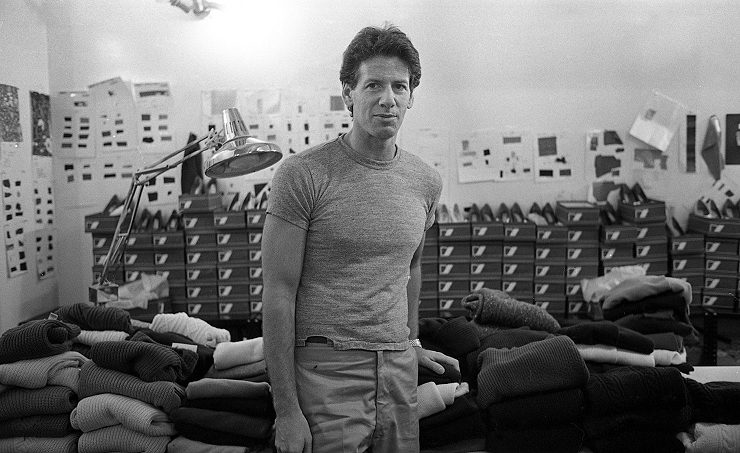
As a child, Calvin was passionate about dancing and drawing. The latter hobby became decisive when choosing an educational institution. Klein enrolled in the High School of Art and Design, and after graduating, he became a student at the Fashion Institute of Technology in New York. Even then, the young man knew he had made the right choice but understood he needed experience before landing a good job. So, for six years, Calvin worked in the workshops of various designers and drew portraits of passersby on the streets of New York. In the evenings, he built his portfolio and dreamed of famous runways.
Undeniable Talent and an Ambitious Goal
American fashion in the mid-1960s was significantly different from today. Most of the clothing in prestigious U.S. stores was merely an imitation of styles presented in Paris. Fashion houses would send artists to Christian Dior shows in Paris to make quick sketches during the runway presentations, which were then used to create new collections. Around that time, American designers began to release clothing under their own brands. This was exactly what Calvin Klein dreamed of. One day, a model he knew mentioned an open position for a designer of plus-size women’s clothing at the Dan Millstein fashion house. Calvin knew his time had come.
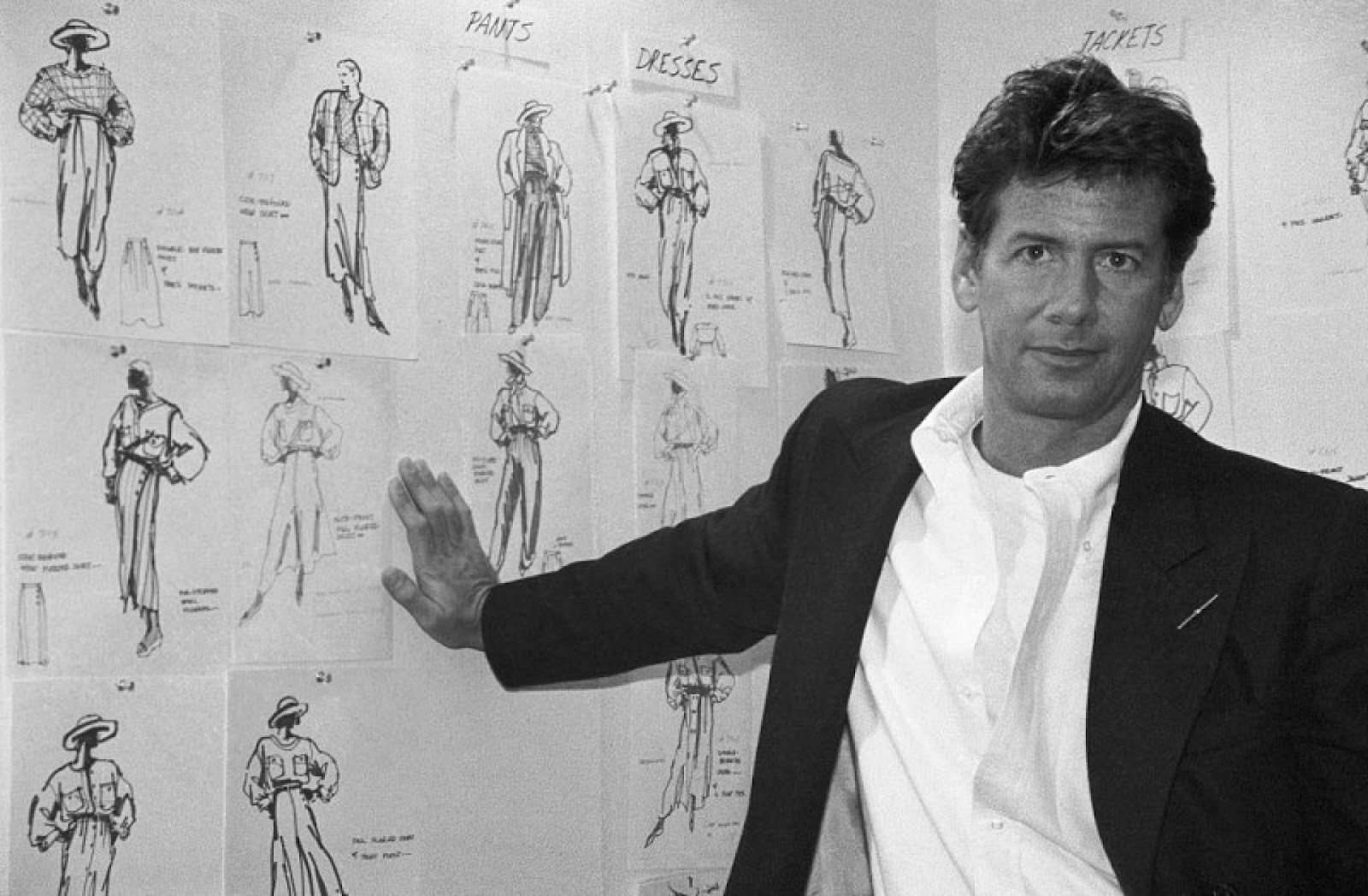
From his first days, Klein impressed his new colleagues, who didn’t expect such skill from a newcomer. Calvin had a special talent: he could accurately sketch any outfit from memory after seeing it just once. As the designer himself noted, this job was a real catalyst for him. His boss was extremely demanding and tough, and few employees lasted long under him. He loaded Klein with a variety of work, from creating sketches to selecting fabrics and fitting finished garments. The pace was difficult, but it truly toughened Calvin, giving him self-confidence and a strong sense of purpose. At that job, Klein realized he knew and could do a lot, and most importantly, he didn’t want to follow someone else’s orders and copy clothes—he wanted to set new trends and create his own fashion.
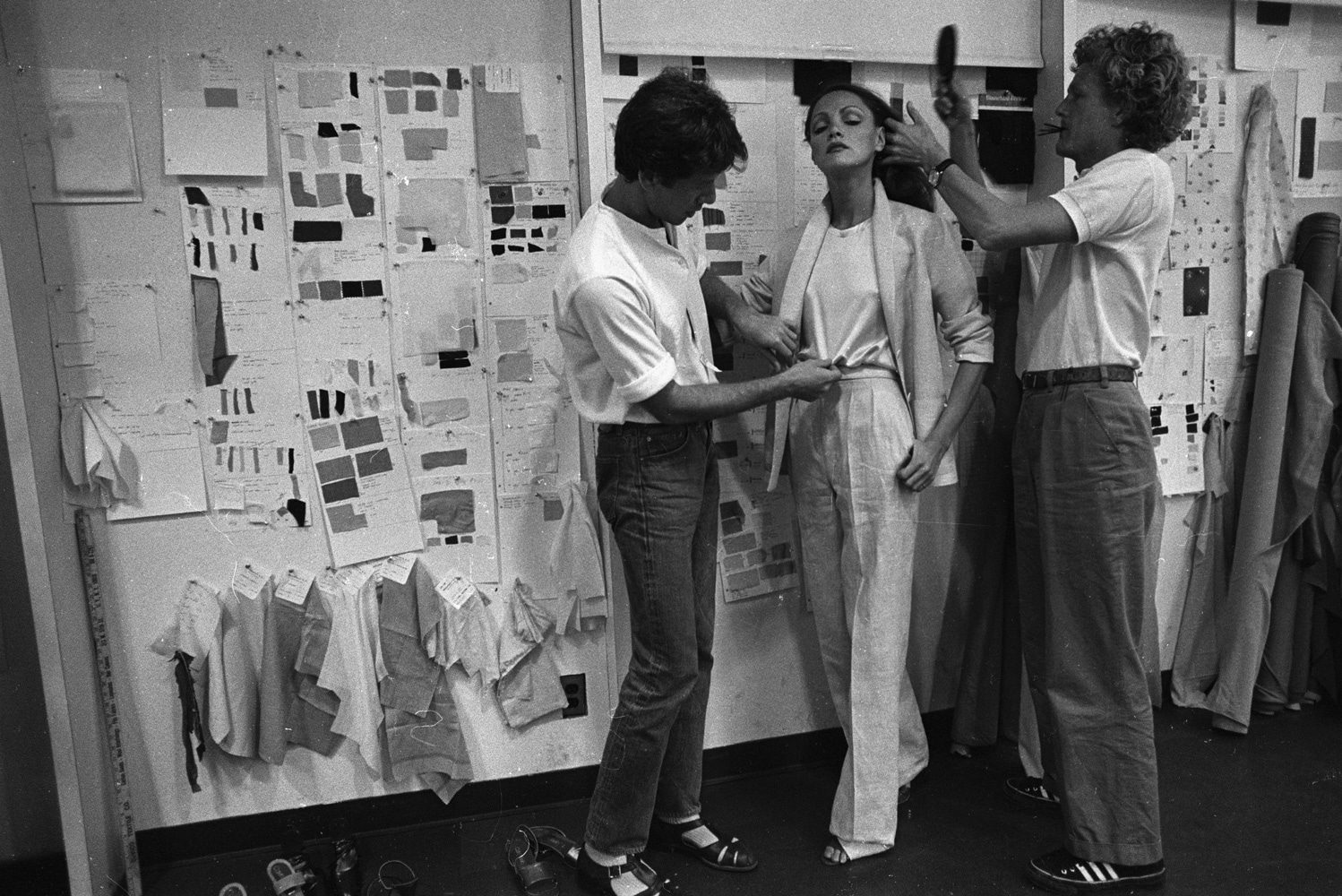
For an article about the popular brand Bronx and Banco, follow this link.
All or Nothing
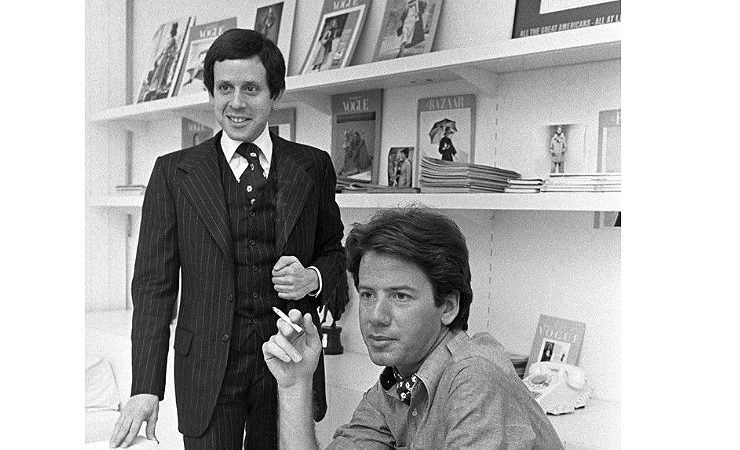
In 1968, Calvin Klein made the final decision to start his own business. It was then that his childhood friend, Barry Schwartz, supported him, agreeing to invest $10,000 in the fashion venture and promising financial backing for the new brand in its initial stages. Calvin and Barry became partners in the firm Calvin Klein Ltd.
The first collection, consisting of just six coats and three dresses, was presented in a small, dark room in the Bonwit Teller department store. It might never have seen the light of day, and Klein’s ambitious plans might have remained just dreams, but a stroke of luck intervened. One day, the store’s director, Mildred Custin, mixed up the buttons in the elevator and accidentally went to a floor she rarely visited, knowing that the cheapest, worst spaces were rented by businesses beneath her notice. But Mildred was stunned when she saw Klein’s collection. She immediately placed an order for $50,000, a huge sum at the time. Custin then offered Calvin her personal help and support in promoting the brand, but on the condition that she be given exclusive sales rights. It was an incredible opportunity to become rich but unknown. Klein chose the latter path—a slow climb to fame. He declined Custin’s sponsorship, deciding he would either find his place in the sun or be left with nothing.
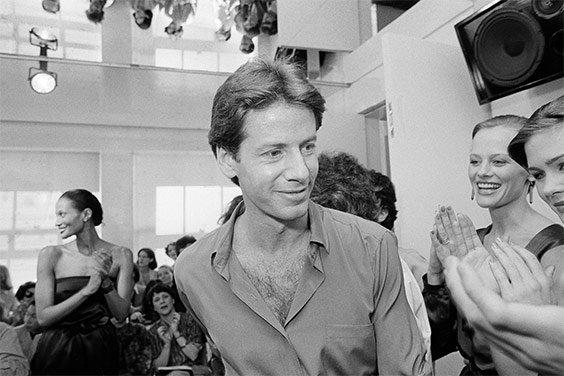
Master of Provocation, Innovator, Rebel, and Genius
And so, Calvin and Schwartz began to work relentlessly. First, they expanded their range, releasing men’s outerwear and increasing the selection of women’s styles. Then came a successful adaptation of the classic men’s suit for women, the popular double-breasted short PeaCoat that became a hit for several years, and the introduction of accessories and fur clothing. In the early 21st century, Calvin Klein was one of the first to introduce the “military” style to fashion (knee-patch pants, greatcoats, khaki-colored clothing).
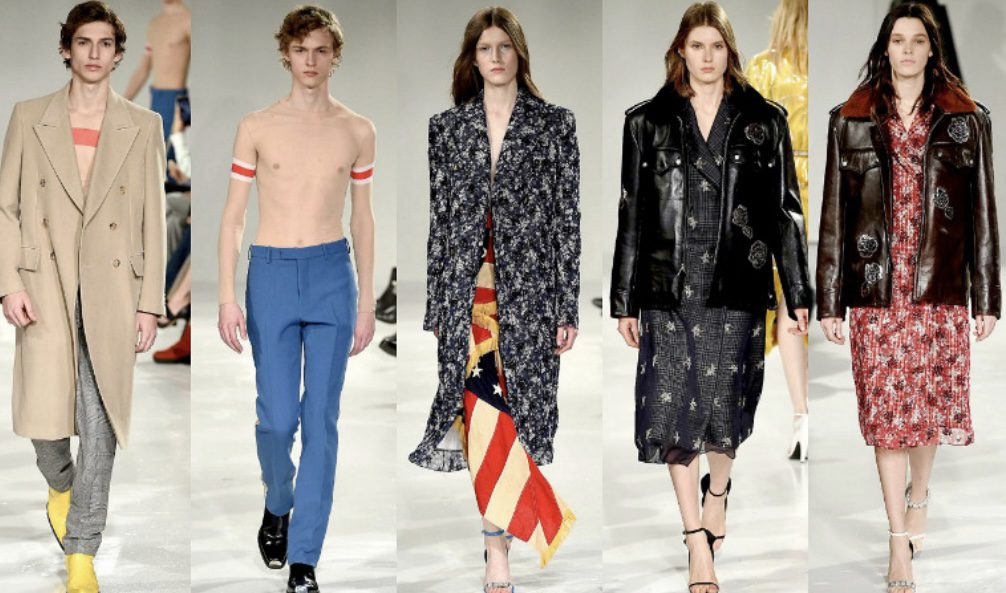
The Calvin Klein brand also became famous for its distinctive perfumery. Its twin fragrances, released for men and women, caused a sensation in the 80s market (“Eternity” in 1983, “Obsession” in 1985, and “Escape” in 1986).
In 1978, Calvin Klein made a “knight’s move” and stunned the fashion world with his idea: he released the first designer jeans with the CK logo on the back pocket.
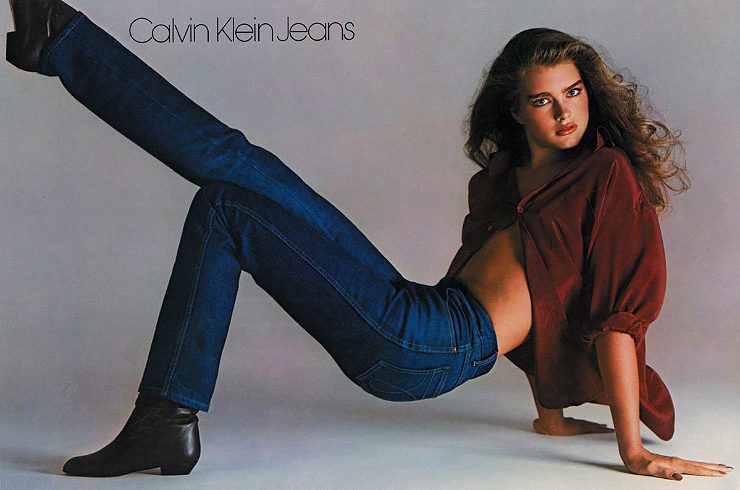
A clothing item that had never been associated with women’s fashion suddenly became the dream of nearly every woman in America.
“I always wanted to involve more people, which is why I got interested in jeans. They gave me the opportunity to send a message to the masses, to create something new,” said Klein.
And the adventurous Klein decided to send this message in a way that everyone would be sure to hear. The provocative advertising for Calvin Klein jeans shocked everyone at the time. The ad poster featured a teenage Brooke Shields in a rather sexualized pose with the tagline: “You want to know what comes between me and my Calvins? Nothing.” The scandal was epic. The designer was accused of using minors and creating near-pornographic imagery. But the main goal was achieved: everyone was talking about Calvin Klein jeans.
Klein’s next provocative move, which shook puritanical America, was the 1992 unisex clothing collection for teenagers. The ad poster featured a semi-nude young model, Kate Moss, and rapper Marky Mark. The girl and boy looked very similar, sharing facial features and body types. But Klein highlighted another similarity: identical clothing that looked great on both of them.
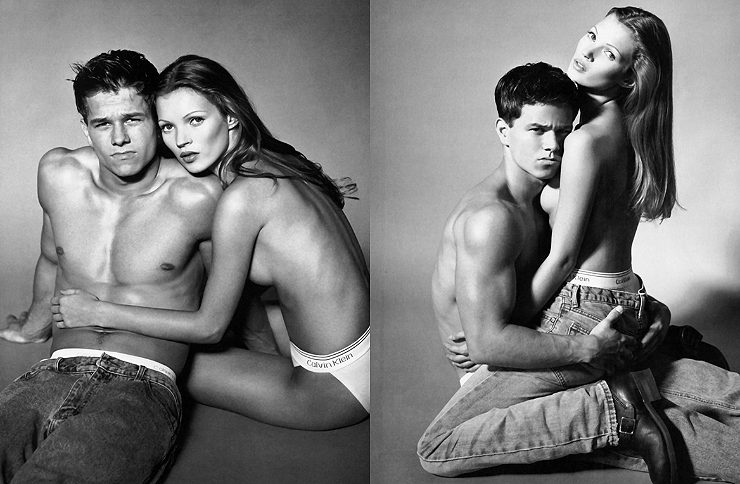
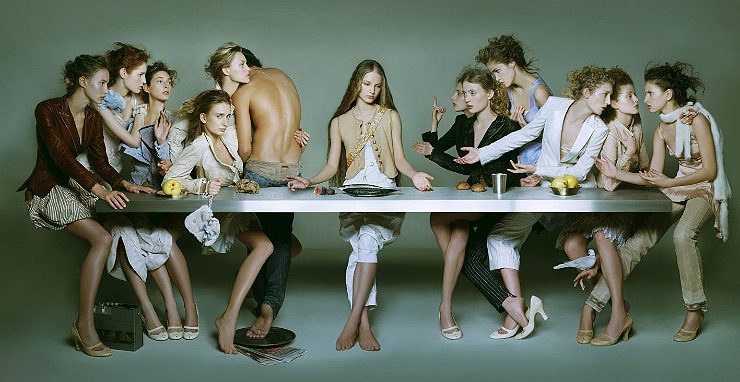
The youth responded positively to the new universal format, but Klein was still accused of an exaggerated emphasis on gender and the sexualization of content. Several more scandals with underwear ads followed, with posters featuring children and teenagers being particularly hotly debated. But perhaps the loudest outcry Calvin Klein ever caused with his provocative advertising was with the appearance of the “Last Supper by CK” poster, where all the participants of the biblical scene were represented by semi-nude models of both sexes in signature CK clothing. At that time, the Catholic Church even won a $1,000,000 lawsuit against the designer for using religious motifs in advertising.
In 2003, the brand Calvin Klein Ltd. was sold to the Phillips-Van Heusen Corporation, which also owns leading denim companies like Lee and Wrangler. But Calvin Klein always remained part of the leadership—first as Creative Director, then as an independent brand consultant.
Despite all the difficulties that accompanied the designer’s career path, including family problems, health issues, alcohol/drug addiction, and the threat of bankruptcy, Calvin Klein created a unique brand.
He won the Coty Award for three consecutive years (1973, 1974, 1975). He received the national U.S. fashion award, the American Fashion Awards, four times.
During one award ceremony, CFDA (Council of Fashion Designers of America) President Stan Herman noted: “The award for lifetime achievement in fashion is given to someone who has been doing their job for a long time, and no one doubts that Calvin is worthy of this status.”

Read the story of another talented designer from the Bronx by following this link.