

Julia de Burgos was a prominent Puerto Rican poet, journalist, and activist. Her works fearlessly explored themes of feminism, colonialism, justice, and personal and national freedom. While living in New York, particularly in the Bronx, she became a powerful voice for Latin American migrants, and after her death in poverty, she became a symbol of pride for the Puerto Rican diaspora. Learn more about one of Puerto Rico’s most renowned 20th-century poets on bronxanka.com.
A Childhood in Poverty and the Shaping of Her Worldview
Julia de Burgos was born on February 17, 1914, in Carolina, Puerto Rico, to Paula García de Burgos and Francisco Burgos Hans. She was the eldest of thirteen children. Her father served in the Puerto Rico National Guard and ran a small farm. The family constantly struggled with scarcity, and six of Julia’s younger siblings died in childhood from malnutrition and poverty-related illnesses. These tragic events profoundly impacted her worldview.
Despite her difficult circumstances, Julia showed an early interest in learning and literature. Thanks to the support of caring community members, she was able to attend the University High School in Río Piedras. Her education there was a crucial period in her development, as it was here that her convictions and artistic voice began to take shape.
In 1931, Julia enrolled as a student at the University of Puerto Rico’s Río Piedras campus. Two years later, she earned her diploma and teaching qualification. At 19, Julia de Burgos began her teaching career in rural areas. This work not only allowed her to earn a living but also deepened her understanding of social inequality and the struggles faced by ordinary Puerto Ricans. All of this later found its way into her poetry and activism. Julia also worked on a children’s radio program for the Department of Education; however, some accounts suggest she was dismissed due to her political views.
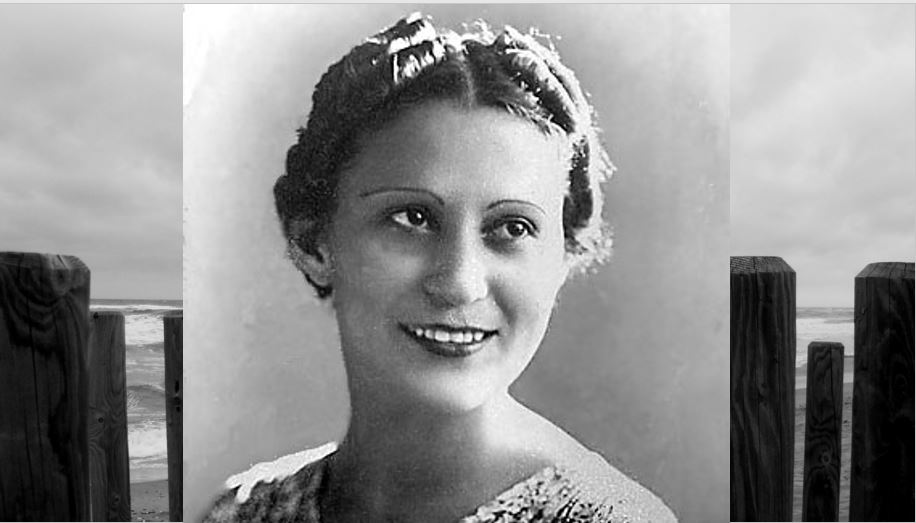
In Search of Herself
In 1934, Julia married Rubén Rodríguez Beauchamp, which effectively marked the end of her teaching career. Nevertheless, she continued to work at a government-run kindergarten under the auspices of the Puerto Rico Emergency Relief Administration. In 1936, Julia joined the Puerto Rican Nationalist Party, led by Pedro Albizu Campos, and became the general secretary of the party’s women’s wing, the Daughters of Liberty. A year later, she divorced her husband and began to write actively.
Over the next two years, two books of her poetry were published: Poema en veinte surcos (1938) and Canción de la verdad sencilla (1939), both receiving recognition from the Institute of Puerto Rican Literature. (A third collection, El mar y tú: otros poemas, was published posthumously in 1954.)
In 1940, Julia left Puerto Rico. She initially came to New York, working as a journalist, and later moved to Cuba with her new love, the physician Juan Isidro Jiménez Grullón. In Havana, she wrote for the press and even enrolled in graduate studies in literature and philosophy at a local university. However, her relationship with Grullón began to deteriorate. After attempts to salvage the connection, she eventually returned to the Bronx alone in 1942, where she was forced to take on simple manual labor to survive. In 1943, Julia met Armando Marín, a musician from Vieques Island, and married him the following year. Yet, this marriage also couldn’t withstand the challenges, and they divorced in 1947. This second personal setback only deepened the poet’s depression and alcohol dependency.
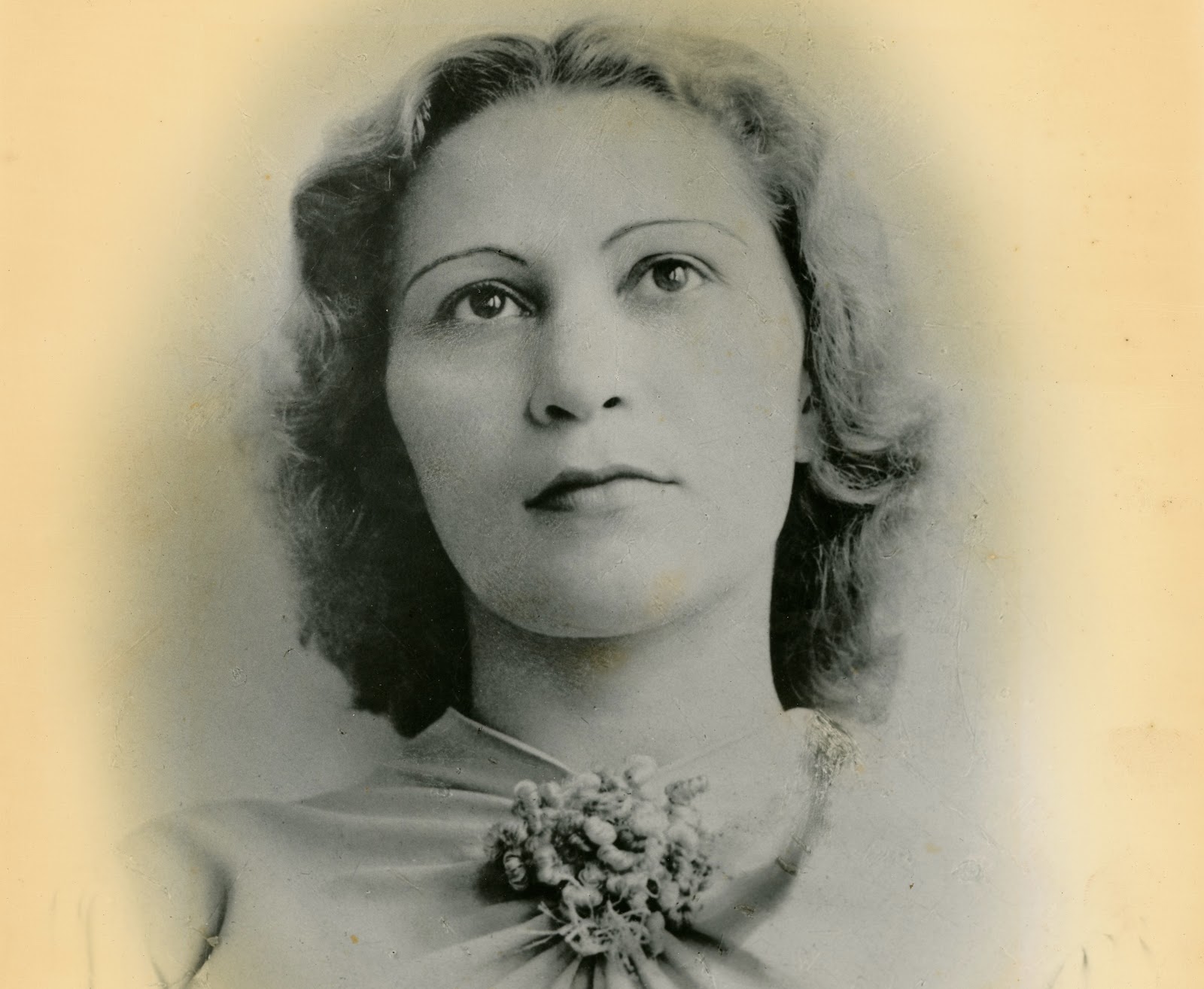
Decline and Death
From 1947 onward, her situation significantly worsened. Julia couldn’t find stable employment, lived in poverty, and battled alcoholism. In 1946, she was diagnosed with cirrhosis of the liver, and later, vocal cord issues. In the final years of her life, de Burgos lived in various parts of Harlem and the Bronx, continuing to write despite her difficult circumstances. She sent her poems to her sister and relatives in Puerto Rico, understanding she couldn’t preserve them herself.
In December 1952, Julia had a papilloma removed from her vocal cords, but her health was already very frail. She spent the first few months of 1953 in the hospital. In her letters to relatives during this period, she wrote extensively about death, and her reflections grew increasingly somber. In February 1953, she penned the poem “Farewell from Welfare Island” in English, expressing deep despair and a readiness to bid farewell to life:
“It has to be from here,
forgotten but unshaken,
among comrades of silence
deep into Welfare Island
my farewell to the world”.
In early May 1953, Julia de Burgos was discharged from the hospital and stayed with friends in Harlem. The last letter her family received from her was dated June 28. After that, communication ceased. It was later discovered that in the early morning of July 5, she was found unconscious on a sidewalk in East Harlem. Police took her to Harlem Hospital, where she died shortly after midnight on July 6, 1953, at the age of 39. The cause of death was pneumonia.
Since she had no identification on her, no one could recognize her. Her body was buried as an unnamed person on Hart Island, in the city’s burial ground for the indigent. It was only a month later, thanks to a photograph of the body taken by the coroner, that her identity was established.
After the poet’s identification, her friends and relatives were able to locate her grave. On September 6, 1953, her body was transported to San Juan. Julia de Burgos was laid to rest as a national heroine in the municipal cemetery in Carolina.
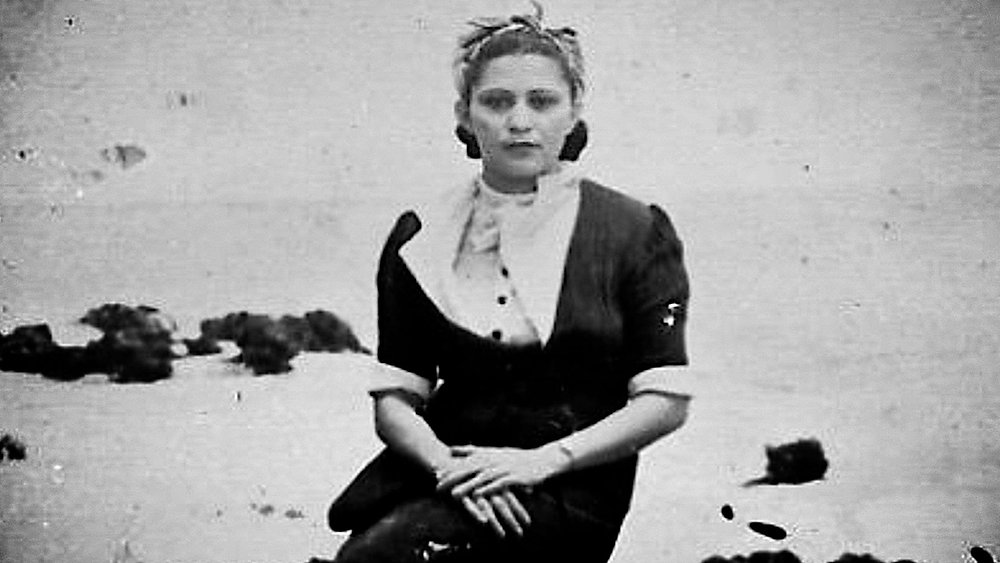
Iconic and Profound Poetry
In her poetry, de Burgos combined lyrical sensitivity, deep emotionality, and social critique. Her works are both intimate revelations and political statements. Her lyrical persona often overcomes limitations, travels, transforms, and seeks freedom in imagination, in the body, and in nature.
One of the most striking themes in Burgos’s work is female identity and protest against societal restrictions. In her famous poem “Julia de Burgos,” she divides herself into two “selves”: one conforms and is socially acceptable, while the other is rebellious, free, and poetic. This work is a candid declaration of a break from the behavioral patterns society imposes on women.
Julia de Burgos’s poetry was closely linked to her political and social views. She became a voice for the oppressed, especially women and the Afro-Caribbean population. She believed that her poetry should be not only artistic but also socially significant.
“What I want to say is more important than how I say it,” was her approach.
Contemporary literary scholars consider de Burgos one of the precursors of feminist literature in Latin America.
In her later works, created under conditions of loneliness, depression, and alcoholism, despair resonates. This is a different Burgos—deeply traumatized but candid to the very end.
Julia de Burgos’s poetry is a multifaceted art that blends the personal and the political, the physical and the spiritual, the intimate and the public. Her works are not only a cultural heritage of Puerto Rico but also a profound conversation about freedom, the female self, and dignity in the world.
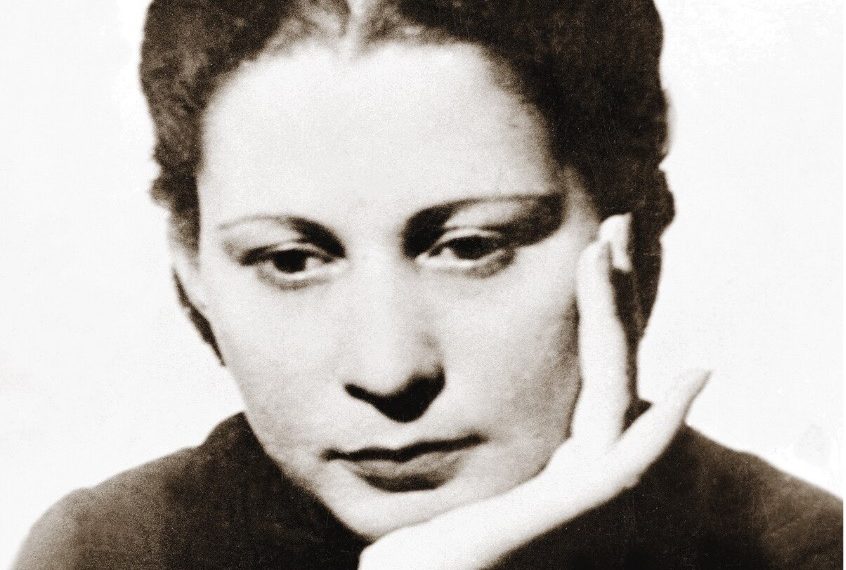
Posthumous Recognition
Julia de Burgos gained recognition during her lifetime — she was honored by the Institute of Puerto Rican Literature, and her works became iconic in the Latin American literary sphere.
The poet’s contribution to literature has been recognized with numerous accolades: in 1986, the University of Puerto Rico posthumously awarded her a doctoral degree, and in 1987, the title of Doctor Honoris Causa.
In various cities across the USA and Puerto Rico, institutions, streets, schools, parks, and cultural centers are named in her honor, including:
- Carolina, Puerto Rico: A school, a park, and a monument dedicated to the poet.
- New York: The Julia de Burgos Cultural Center, a boulevard named after her, and a school.
- Philadelphia and Chicago: Schools and parks bearing her name.
- Cleveland, Ohio: The Julia de Burgos Art Center.
- Willimantic, Connecticut: A park established by Curbstone Press.
- San Juan, Puerto Rico: Casa Protegida Julia de Burgos, a women’s shelter.
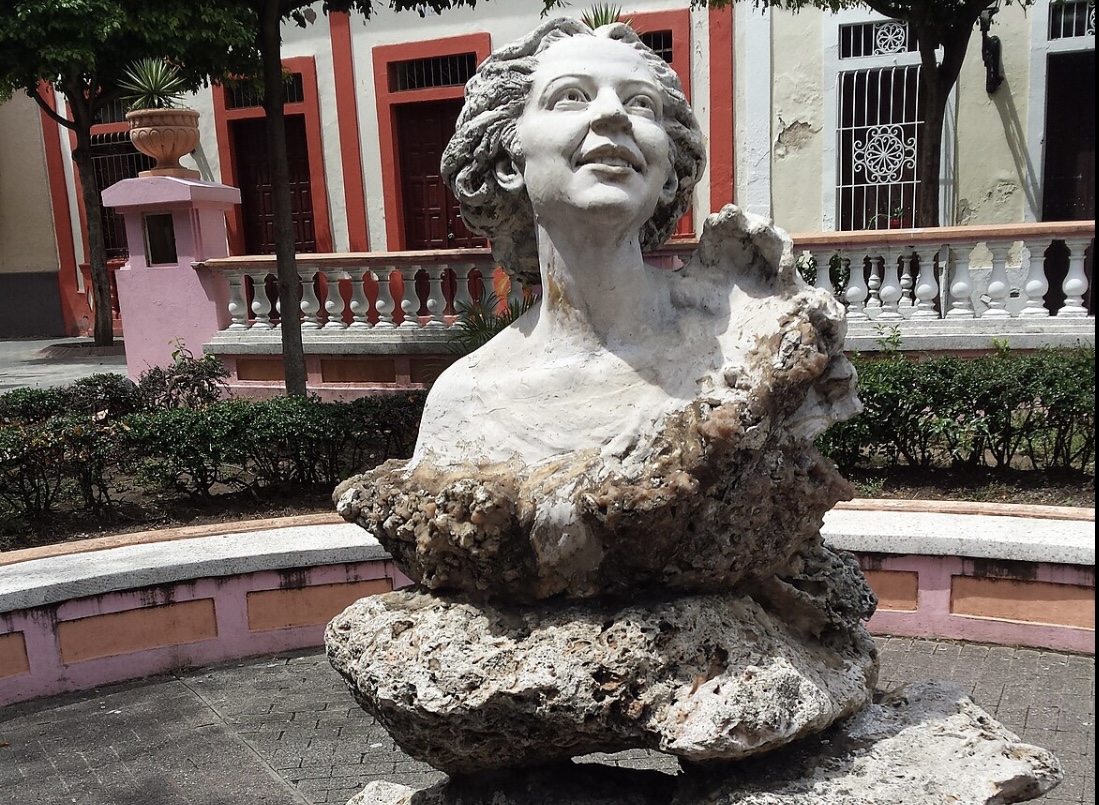
In 2002, a documentary film about Julia de Burgos was released. On September 14, 2010, the U.S. Postal Service issued a postage stamp in her honor as part of its “Literary Arts” series. In 2011, Julia de Burgos was inducted into the New York Writers Hall of Fame. In San Juan, in a square dedicated to prominent Puerto Rican women, she was honored among 12 women who left their mark on the island’s history.