

She was often called “Battling Bella.” She was an American lawyer, politician, and activist, as well as a key leader of the women’s movement. This is the story on bronxanka.com of a woman who played a vital role in shaping the movement that would later be called ecofeminism.
The Girl from the Bronx Who Challenged Tradition
Bella Abzug was born on July 24, 1920, in the Bronx. Her parents, Jewish immigrants from Chernihiv, Ukraine, came to America via Ellis Island at the beginning of the 20th century. Her mother, Esther, was a homemaker, and her father, Emanuel, opened his own meat market on Ninth Avenue with the telling name “Live and Let Live.” Young Bella often helped him behind the counter. Her Jewish upbringing was the first catalyst for her rebellious feminism. In the synagogue, Bella couldn’t stand that women were seated separately in the balcony. And when her father died when she was 13, she learned that girls were forbidden from reading the Kaddish. But Bella refused to submit; she came to the synagogue every day and recited the prayer herself. The men looked on disapprovingly but didn’t dare to stop her. Abzug later recalled:
“Those mornings taught me that you can do non-traditional things.”
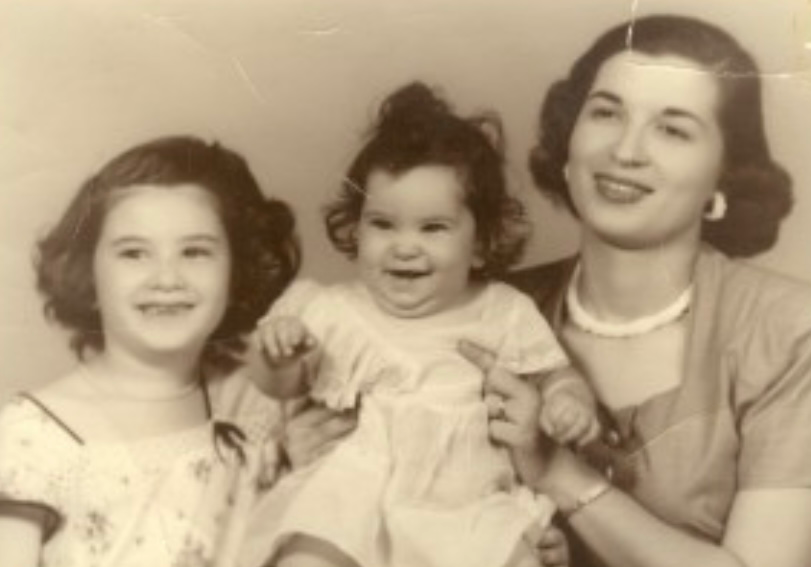
Bella attended Walton High School in the Bronx, where she was class president, played the violin, and, after school, attended the Florence Marshall Hebrew High School. In college, Bella was just as active as she had been as a child. At Hunter College, she became student council president, studied political science, and, in parallel, attended the Jewish Theological Seminary and gave passionate speeches, even on subway cars. She combined her passion for public affairs with her legal education. In 1944, Abzug graduated from Columbia University Law School, where she served as an editor of the law journal.
The Lawyer with a Hat
Even in the mid-1940s, when there were almost no women in New York law firms, Bella Abzug broke that barrier. In 1945, she was admitted to the bar and started working at the firm of Pressman, Witt & Cammer, where she took on the most challenging and dangerous cases. She specialized in labor rights, tenants’ rights, and civil liberties. Early in her career, Abzug traveled to the American South, where she defended Black citizens in court. She tried to save the life of Willie McGee, who had been sentenced to death after only two and a half minutes of deliberation by an all-white jury. Despite her efforts, the appeal was denied, and the man was executed. This experience made Bella even more determined to fight against injustice.
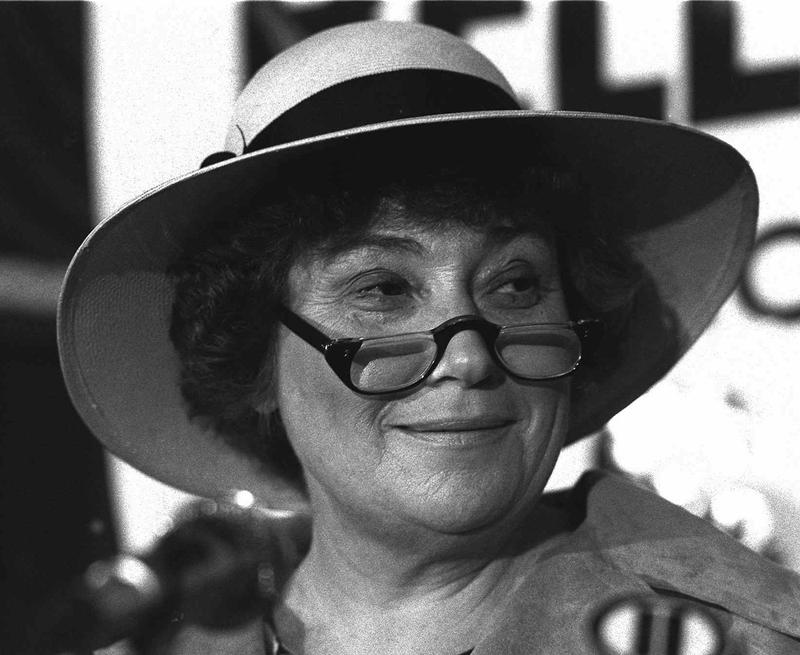
She worked for the American Civil Liberties Union and the Congress of Racial Equality, defended auto workers and longshoremen, and spoke out against the arbitrary actions of Senator Joseph McCarthy. In a time when many were afraid even to say the word “freedom,” Bella openly debated the House Un-American Activities Committee.
In the 1960s, Abzug co-founded the Women Strike for Peace movement, which began as a protest against the nuclear arms race and later grew into mass demonstrations against the Vietnam War. She led marches in Washington, demanding an end to nuclear weapons testing and military aggression.
Her style was direct, even blunt. Abzug would ironically respond:
“Am I impatient, impulsive, arrogant, rude, profane, brash, and bossy? Possibly. But what you have to understand is I’m a very serious woman.”
To ensure clients saw her as a lawyer and not a secretary, she always wore a hat. It later became her symbol.
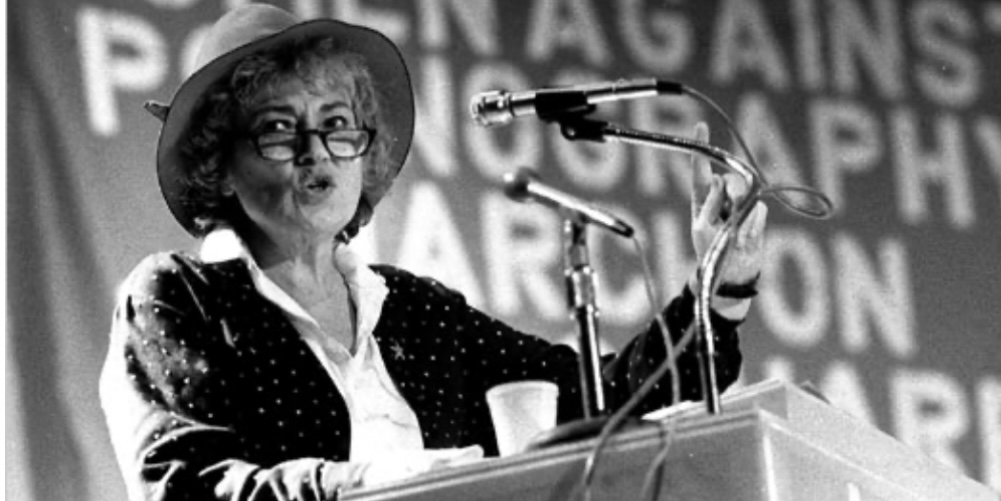
“Battling Bella” in Washington
Bella Abzug decided to enter major politics at the age of 50—an age when most women of her generation didn’t even dream of public office. Her campaign slogan was sharp and direct:
“This woman’s place is in the House—the House of Representatives.”
In 1970, she convincingly defeated her opponent, who had 18 years of experience, to win the seat of congresswoman from Manhattan.
In Washington, Bella acted quickly and uncompromisingly. She secured billions in investments for transportation and public projects in New York, and co-authored historic laws. These included Title IX, which prohibited sex discrimination in education, and the first law guaranteeing women equal rights to obtain credit. She also pushed for amendments to the Freedom of Information Act, making the government more transparent to citizens.
Her hats became legendary, but Bella herself joked:
“Don’t get carried away by the hats. What’s important is what’s under the hat.”
It’s no surprise that Abzug was nicknamed “Battling Bella.” She wasn’t afraid to argue, criticize her colleagues, or even offend her opponents. For some, she was a symbol of courage; for others, the embodiment of an inconvenient, “too loud” woman.
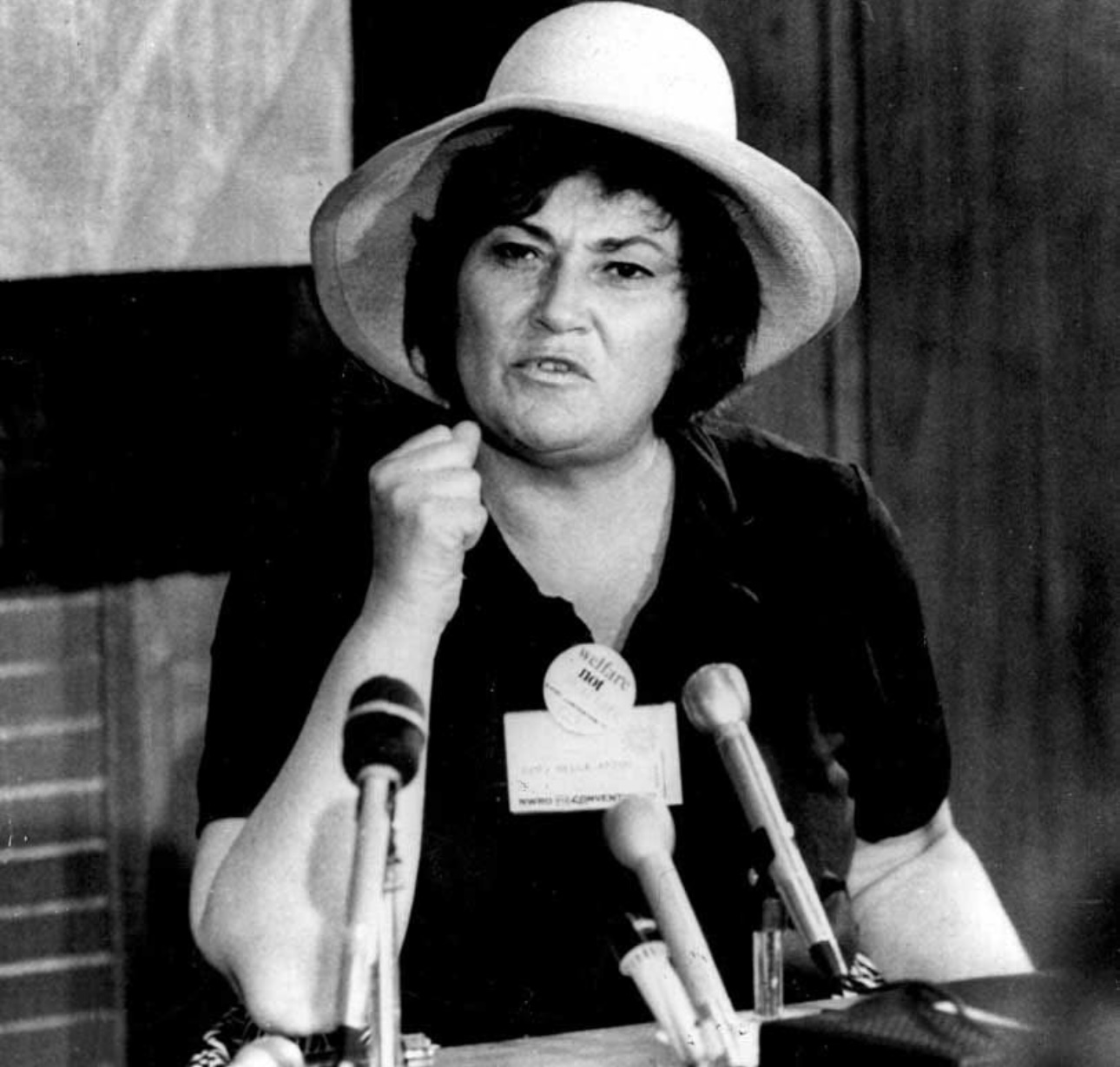
In 1976, Abzug became the first woman to run for the U.S. Senate from New York but lost to Daniel Patrick Moynihan by less than one percent. A year later, she took another unprecedented step, running for mayor of New York—again, the first woman to do so.
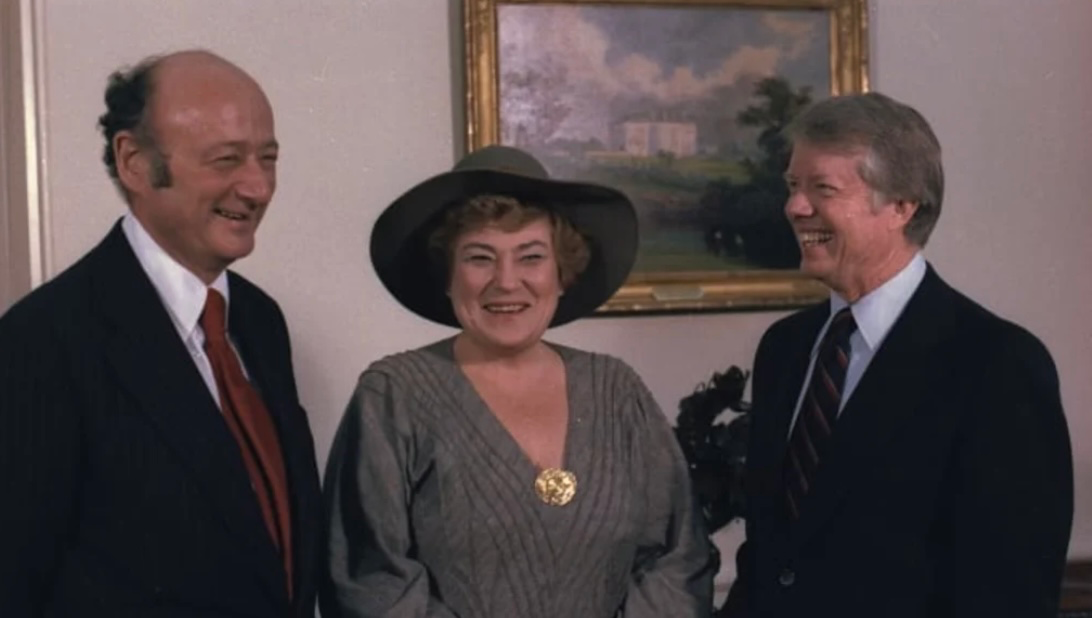
Her career in Congress lasted only a few years, but it was enough to leave a deep mark. In 1977, Bella chaired the National Women’s Advisory Council under President Jimmy Carter and presided over the first National Women’s Conference in Houston, which brought together thousands of delegates and laid the groundwork for future women’s platforms for action.
Bella Abzug didn’t win every election, but every campaign she ran was a breakthrough—she changed the rules of the game.
The Main and Final Mission
Later, Abzug co-chaired the National Women’s Advisory Committee, but her principled stance led to a conflict with the White House, and in 1979, she resigned from the position.
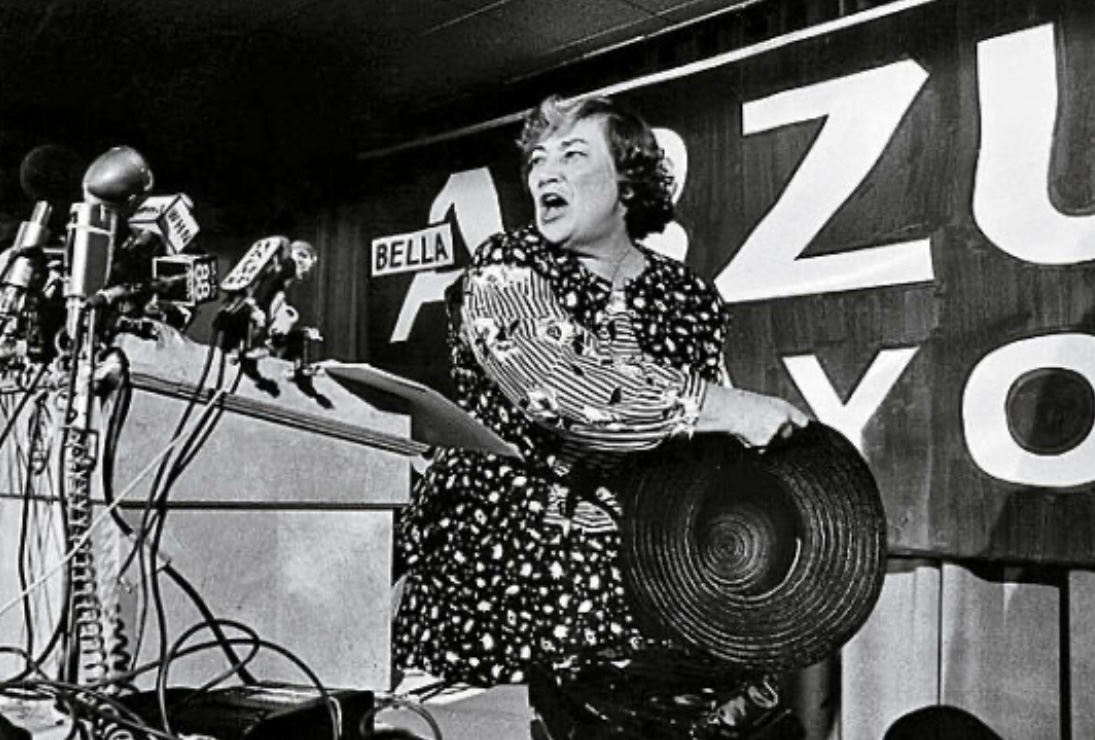
But Bella was never idle. She founded new women’s organizations, led marches and rallies, spoke at protests, and headed the Women’s Equality Day march in New York in 1980.
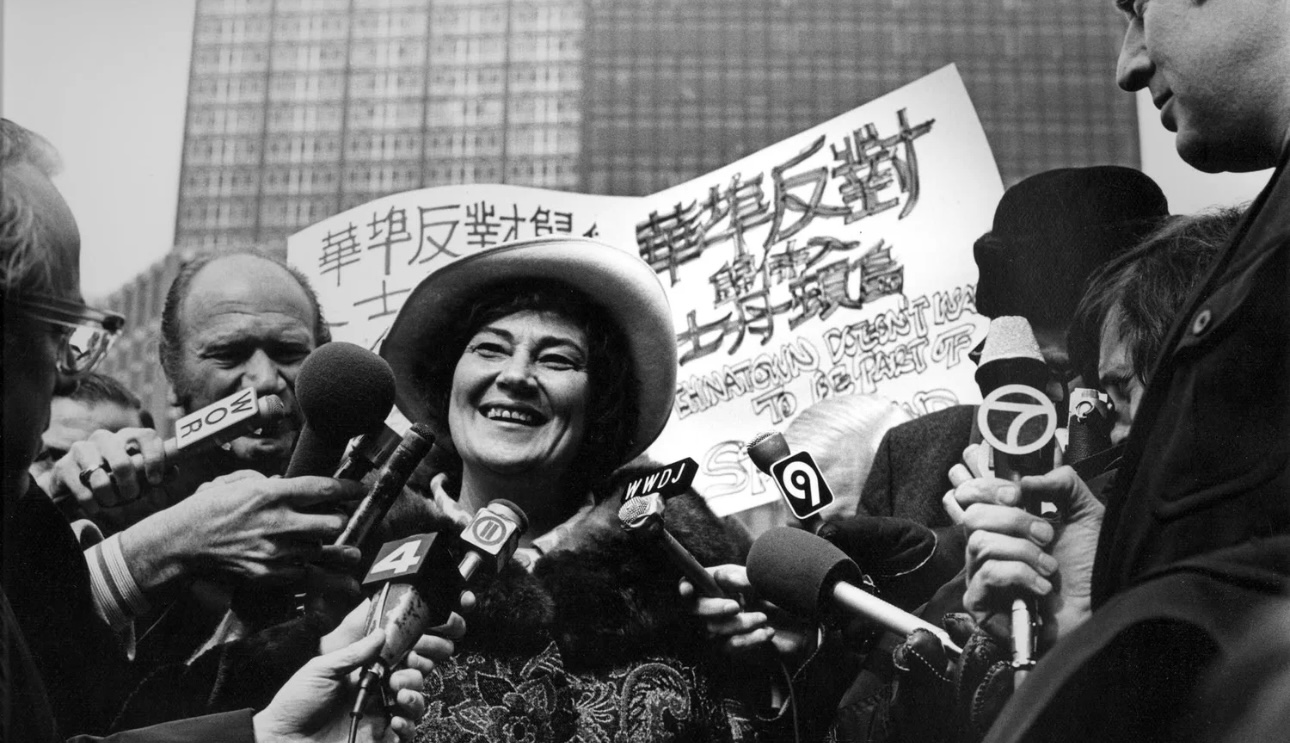
In the 1990s, Abzug took to the international stage. With her friend and colleague Mim Kelber, she founded the Women’s Environmental and Development Organization (WEDO). This marked a new phase of her mission—a global feminism that combined women’s rights, ecology, and economic justice. Under Abzug’s leadership, WEDO organized the World Women’s Congress for a Healthy Planet in Miami in 1991, bringing together 1,500 delegates from 83 countries. Their “Women’s Action Agenda for the 21st Century” became a crucial roadmap for future international agreements.
Bella spoke at UN conferences, insisted on gender-sensitive policies, and advocated for women’s rights in Rio de Janeiro in 1992 and in Beijing in 1995. Even while using a wheelchair, she never stopped traveling and speaking.
Personal Life, Recognition, and Legacy
In 1944, Bella married Martin Abzug—a novelist and stockbroker. They met by chance on a bus in Miami while both were on their way to a concert. They stayed together until Martin’s death in 1986 and raised two daughters. Bella always credited her husband for his support and willingness to share household duties, which allowed her to actively build her career in politics and public life.
During her lifetime, Abzug received numerous honors and awards. In 1974, sculptor Jeff London created the work Furniture for the People, which reflected Abzug’s ideas. In 1991, she received the “Maggie” Award from the Planned Parenthood Federation. In 1994, Bella was inducted into the National Women’s Hall of Famein Seneca Falls, and in the same year, she received a medal from the Veteran Feminists of America. On March 6, 1997, at the UN, she was honored as a leading female ecologist, and soon after, she was given the “Blue Berets” award, the highest civilian recognition from the UN.
Bella’s legacy continued through her family. In 2004, her daughter Liz Abzug founded the Bella Abzug Leadership Institute (BALI), which mentors and trains high school and college students to become effective leaders in civic, political, and corporate life.
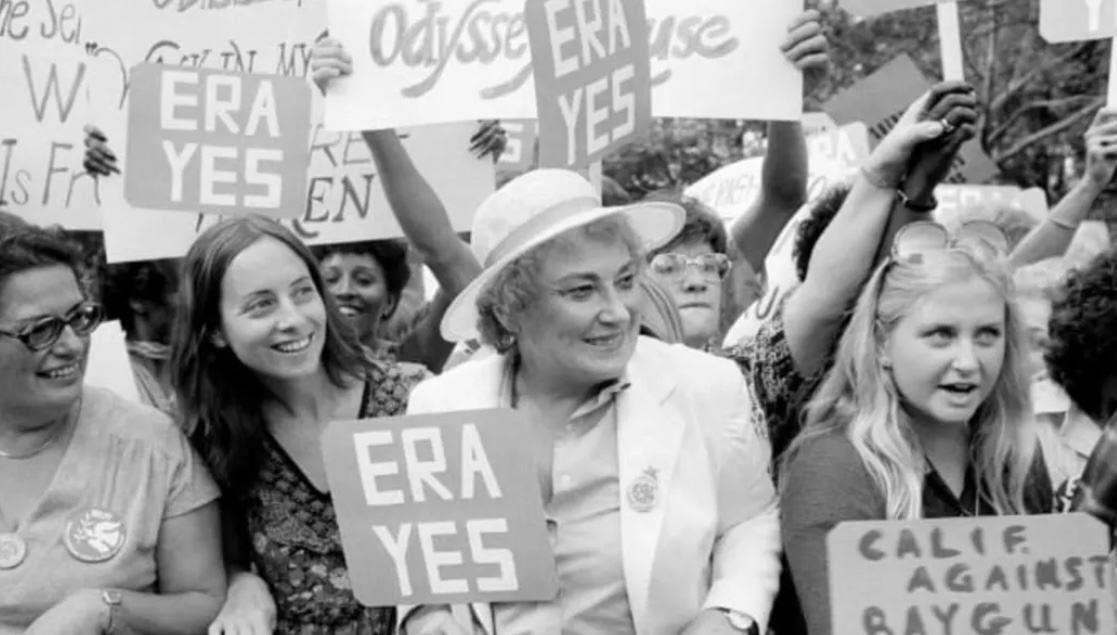
Bella’s memory is also preserved in New York. In 2019, the Hudson Yards Park was renamed Bella Abzug Park, and a portion of Bank Street in Greenwich Village bears her name.
Abzug also left her mark on popular culture. She appeared in Woody Allen’s film Manhattan, a 1977 episode of Saturday Night Live, and the documentary series New York: A Documentary Film. Her image appeared on 1979 “Super Sisters” trading cards, in a 1987 ABC miniseries, a 1989 Beastie Boys music video, and the 2019 theatrical play Bella Bella. In 2020, Margo Martindale and Bette Midler portrayed her in the miniseries Mrs. America and the film Gloria, respectively. The 2023 documentary Bella! features numerous interviews with her contemporaries and colleagues, including Gloria Steinem, Hillary Clinton, and Barbra Streisand.
In her final years, Bella battled breast cancer and heart disease, using a wheelchair. On March 16, 1998, speaking before the UN Commission on the Status of Women, she gave her last speech:
“Now is the time to declare, as we approach the great millennium, that women must be free… We cannot be free as long as our human rights are violated…”
Two weeks after that speech, Bella Abzug died in New York.
At her memorial service, Geraldine Ferraro summarized her legacy:
“She didn’t tap lightly on the door. She didn’t even open it or break it down. She took the hinges off forever! So that those who came after could walk through.”